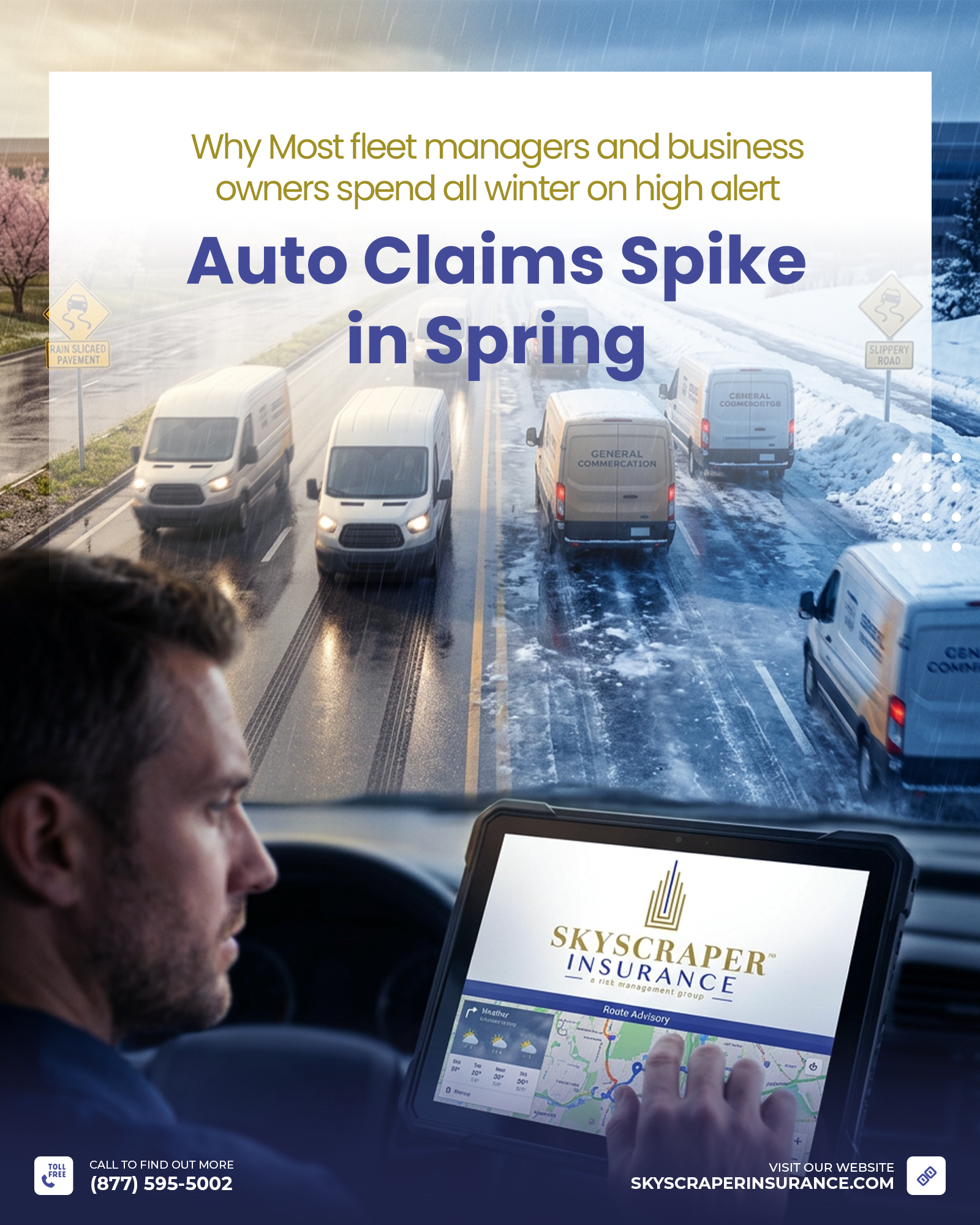
Most fleet managers and business owners spend all winter on high alert. We worry about black ice, blinding snowstorms, and frozen batteries. But as the “winter fog” lifts and the flowers start to bloom, there is a dangerous tendency to let our guard down.
At Skyscraper Insurance, we’ve analyzed the data, and the reality is counterintuitive: Commercial auto claims often spike in the spring. Spring is a deceptive season for drivers. It’s not just about the rain; it’s about a convergence of environmental, infrastructure, and human factors that create a high-risk environment for your fleet. If you haven’t revisited your driving protocols since the thaw began, you’re likely operating on a “winter mindset” that doesn’t account for spring’s unique hazards.
1. The Pothole Pandemic: Infrastructure in Decay
The “Freeze-Thaw” cycle is the primary enemy of asphalt. During the winter, water seeps into cracks in the road and freezes, expanding the gaps. When spring arrives and that ice thaws, it leaves behind hollow cavities under the road surface. As your heavy commercial vehicles drive over these weak spots, the pavement collapses.
For a fleet, potholes are more than just a nuisance; they are a direct hit to your loss runs. Beyond the immediate tire and rim damage, hitting a significant pothole can:
- Misalign Steering: Leading to long-term tire wear and decreased fuel efficiency.
- Cause Sudden Swerving: Drivers instinctively jerk the wheel to avoid a hole, leading to side-swipe collisions with other vehicles.
- Damage Suspension: Often resulting in “hidden” mechanical failures that lead to accidents weeks later.
2. The Visibility Trap: Rain, Mud, and Glare
Spring rain is different from winter snow. It’s persistent, it creates standing water, and it kicks up road grime that hasn’t been washed away by winter crews.
One of the most ignored spring risks is hydroplaning (aquaplaning). Even a thin layer of water can cause a vehicle’s tires to lose contact with the road, especially if your fleet’s tire treads were worn down by months of winter driving. Additionally, the “Spring Glare”—where the sun sits lower on the horizon during morning and evening commutes—reflects off wet pavement, temporarily blinding drivers who aren’t prepared with polarized lenses or clean windshields.
3. The “Spring Fever” Human Factor
As the weather warms up, road demographics change instantly. Drivers are no longer just sharing the road with other cars and trucks; they are now navigating around:
- Pedestrians and Cyclists: Who are out in record numbers after months of being indoors.
- Construction Crews: Q2 is the official start of “orange cone season,” leading to sudden lane shifts and erratic traffic patterns.
- Active Wildlife: Spring is peak migration and mating season for animals like deer, leading to a massive increase in “animal strike” claims during dusk and dawn.
Seasonal Risk Comparison: Winter vs. Spring
To help your safety officers prioritize training, review the comparison of these core risk factors:
| Risk Factor | Winter Reality (The Known) | Spring Reality (The Deceptive) |
| Road Surface | Ice and Snow (Obvious) | Potholes and Oil Sheen (Hidden) |
| Traffic Mix | Mostly Vehicles | Cyclists, Pedestrians, and Construction |
| Visibility | Early Darkness / Blizzards | “Wet Road” Glare and Heavy Fog |
| Driver State | High Alert / Tense | “Spring Fever” / Overconfidence |
| Wildlife | Dormant / Low Activity | High Activity (Migration/Mating) |
4. Post-Winter Vehicle Fatigue
A vehicle that survived the winter is a vehicle that has been stressed. Salt and brine have been eating away at brake lines and electrical sensors for months. If your fleet maintenance schedule hasn’t included a deep-cleaning and “post-winter” physical, you are likely deploying trucks that are one “hard brake” away from a mechanical failure claim.
Pro Tip: Check your wiper blades now. The ice and salt of January likely shredded the rubber edges, making them useless for the heavy downpours of April.
Secure Your Fleet with a Safety Review
Insurance premiums for commercial auto are higher than ever, and a “preventable” spring accident is the last thing your balance sheet needs. You cannot control the potholes or the weather, but you can control your fleet’s readiness.
At Skyscraper Insurance, we don’t just write policies; we help you build a culture of safety. We look at your telematics, your maintenance logs, and your driver training programs to identify the gaps before they turn into expensive claims.
Don’t let “Spring Fever” derail your Q2 momentum. Reach out to our expert team today to schedule a comprehensive Fleet safety review. We will help you fortify your driving protocols, adjust your deductibles, and ensure that your team is fully prepared for the unique challenges of the road ahead.
Skyscraper Insurance: We Share Your Vision for a Better Tomorrow!