As the calendar turns and the initial momentum of the year solidifies into mid-year operational scaling, many corporate executives are buried under seasonal financial performance metrics. You are analyzing regional sales pipelines, finalizing Q1 balance sheets, and setting aggressive targets for the rest of the second quarter.
But at Skyscraper Insurance, we look at this transition through a completely different lens.
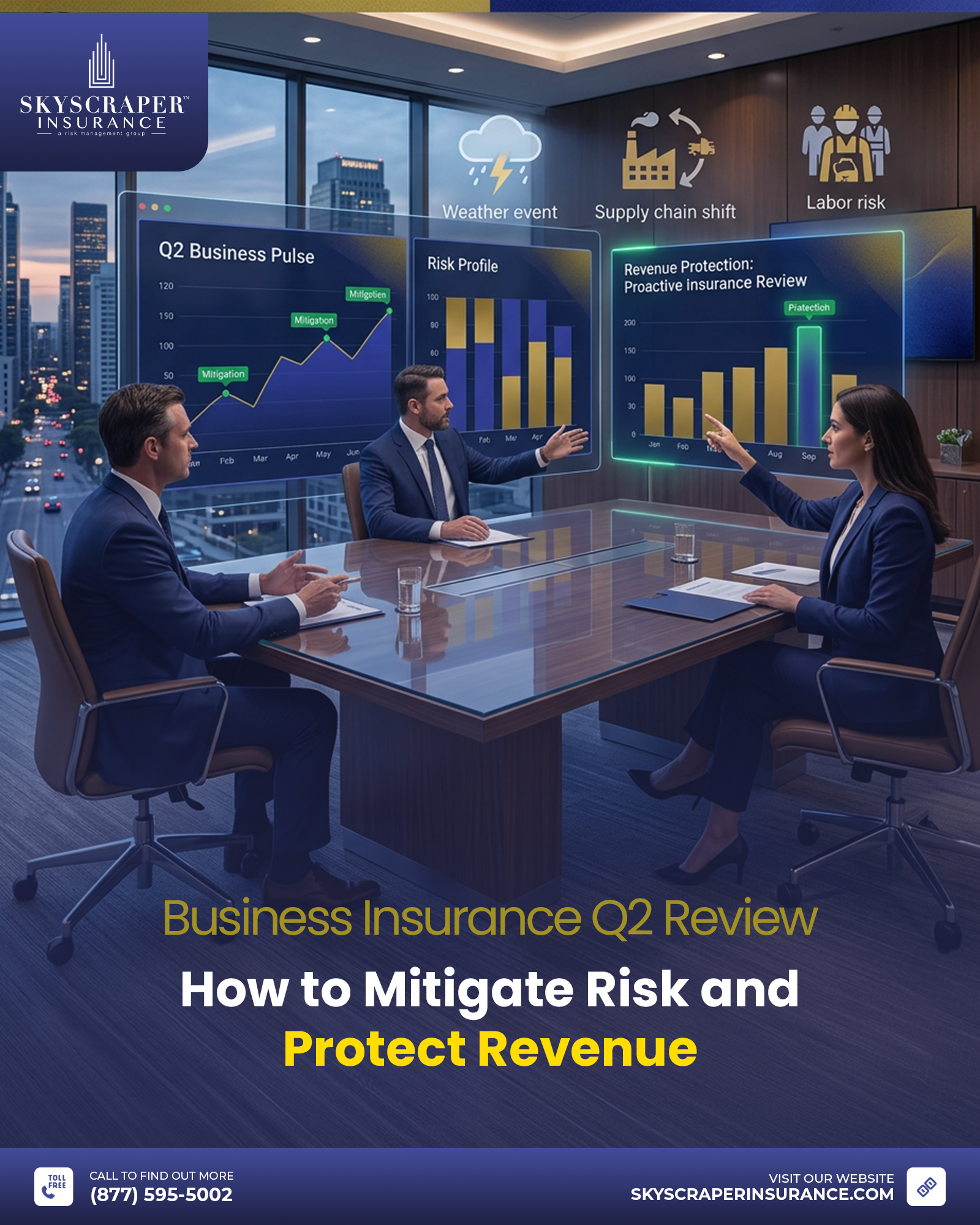
The spring rush brings a massive operational shift. It is the period when weather patterns intensify, outdoor exposures multiply, temporary labor contracts activate, and new supply chain paths are forged. If you are charging into Q2 relying on risk assumptions made back in December, you are flying completely blind into the most volatile months of the fiscal year.
Before the summer rush hits, it is time for an insurance reality check. Let’s review the critical vulnerabilities that open up during this seasonal pivot and how to address them before they compromise your bottom line.
1. The Fleet and Transit Blindspot
For businesses involving logistics, construction, or field services, this season marks a dramatic spike in road hours. Fleet vehicles are logging more miles, local deliveries are expanding, and heavy equipment is moving between job sites.
In the insurance world, increased road hours translate directly to heightened loss probability.
The Hired and Non-Owned Auto Threat:
During a mid-year operational surge, it is incredibly common for managers to authorize employees to drive their personal vehicles for urgent corporate errands—whether that’s picking up a client from an airport or grabbing parts from a local distributor.
If that employee triggers a serious multi-vehicle accident, their personal auto policy limits will vanish in seconds. Plaintiffs’ attorneys will bypass the driver entirely and target your corporate balance sheet. Without a robust Hired and Non-Owned Auto (HNOA) endorsement structured around your current operational volume, your business is directly exposed to catastrophic litigation.
2. The Mid-Year Supply Chain Shift
By the end of the spring cycle, many businesses have adjusted their vendor networks to combat persistent component delays or fluctuating material costs. You may have onboarded new suppliers, signed agreements with different third-party logistics (3PL) partners, or shifted manufacturing to a new regional subcontractor.
From an underwriter’s perspective, every new vendor is a fresh variable that can completely break your risk profile.
If you do not execute an aggressive audit of your Certificates of Insurance (COIs) for every new partner brought online over the last 90 days, you are likely absorbing their liabilities. If a new subcontractor causes a severe structural failure or data breach on your behalf, and their policy limits are deficient, the entire loss cascades directly onto your primary coverage—driving up your premiums for years to come.
The Q2 Risk Alignment Matrix: Operations vs. Exposure
To help your leadership team execute a clean check, look at how common operational adjustments create immediate insurance requirements:
| Operational Reality | Hidden Risk Exposure | The Necessary Policy Alignment |
| Launching Seasonal Outdoor Facilities / Pop-Ups | Third-party slip-and-falls, unpredictable weather damage, and localized inventory theft. | Designated Premises Endorsement: Extends your primary GL safety net to the temporary location. |
| Onboarding New Vendor Networks | Subcontractor negligence dragging your primary policy into high-dollar lawsuits. | Hold Harmless Audits: Enforce strict contractual indemnification and Additional Insured status. |
| Expanding Digital E-Commerce Channels | High-velocity transaction volumes drawing targeted ransomware and intercept attacks. | Cyber Sublimit Restructuring: Ensure funds-transfer fraud limits match your real-time cash flows. |
| Accelerating Machinery Run-Times | High-temperature operational stress leading to sudden mechanical or electrical failure. | Equipment Breakdown Insurance: Covers the cost of business income loss and diagnostic repair. |
3. The Property Value Drift
As we navigate through the current economic environment, construction and raw material costs continue their upward trajectory. If your commercial property limits were locked in during your winter renewal, they are already lagging behind real-world reconstruction costs.
If a catastrophic fire or localized weather event damages your facility, relying on outdated property values will trigger severe coinsurance penalties. You could find yourself holding an un-payable bill for a partial loss simply because your policy limits didn’t keep pace with the shifting economic realities of the last few months.
Take Control: Start Q2 Strong
You shouldn’t run a business hoping your coverage matches your current operations. True corporate resilience isn’t about reacting to an incident report; it is about engineering your risk portfolio so that your insurance policy scales at the exact same speed as your corporate revenue.
At Skyscraper Insurance, we don’t believe in waiting for your annual renewal to protect your assets. Our dedicated commercial risk advisors practice continuous advocacy. We look past the boilerplate paperwork to stress-test your current vendor agreements, audit your fleet exposures, realign your property replacement values, and ensure your business is fully insulated against modern liabilities.
Are your insurance limits actively protecting your growth, or are you carrying liabilities on outdated numbers?
Don’t let a seasonal operational shift turn into an uninsured financial loss. Reach out to our expert commercial advisory team today to start Q2 strong. We will run a comprehensive operational check, eliminate hidden exposure gaps, and ensure your business stays completely protected through every seasonal surge ahead.