When a Rental Strategy Changes Overnight, Insurance Doesn’t Always Follow Suit
From the curb, the property looks identical to how it looked yesterday. The rooflines, masonry, landscaping, and foundation are completely undisturbed. The square footage hasn’t expanded, and the replacement cost value remains mathematically the same.
Yet, behind the front door, the operational reality of the asset has transformed.
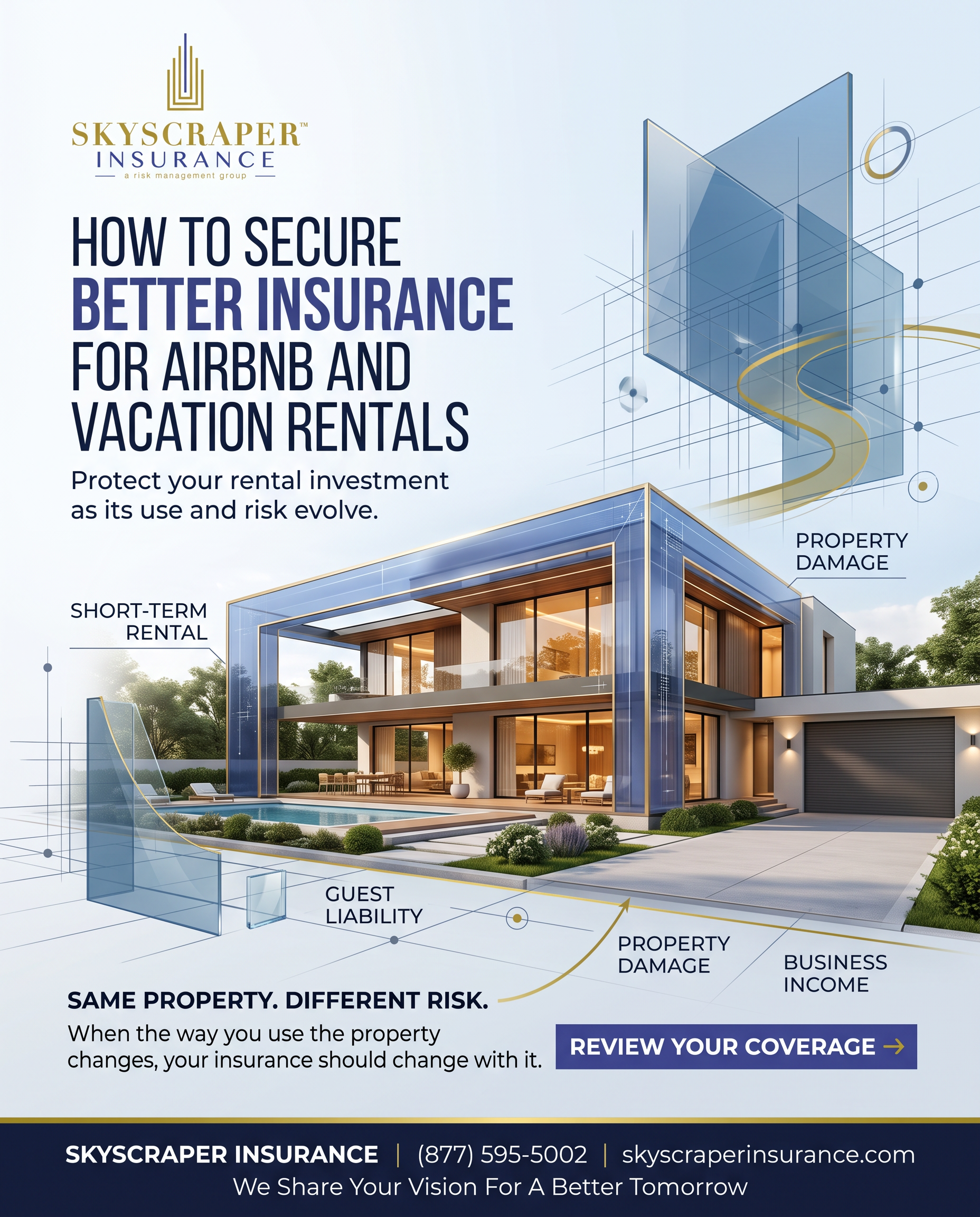
Perhaps an executive long-term tenant vacated, and the owner pivoted to lucrative short-term rentals (STRs) on platforms like Airbnb or Vrbo. Perhaps the property transitioned into a mid-term corporate rental housing traveling medical staff or displaced policyholders. Or maybe a seasonal vacation retreat was opened up to weekly bookings to offset carrying costs.
To an investor or property owner, adjusting an occupancy strategy is a rational yield-optimization decision. But to an insurance underwriter, that pivot shifts the asset into an entirely different risk class. When a rental model changes without a corresponding overhaul of your insurance architecture, the policy in your drawer frequently becomes virtually void of coverage the moment a loss occurs.
At Skyscraper Insurance, we analyze property through a risk-engineering lens. Protecting your real estate investments requires understanding why operational changes trigger drastic coverage vulnerabilities, and how to construct an insurance architecture that protects your cash flow and equity.
1. The Perils of Operational Shift: Why Underwriters Treat Rentals Differently
Underwriters evaluate real estate using two distinct lenses: Physical Hazard (what the building is made of) and Operational Hazard (how the building is occupied and used). When your tenant strategy shifts, the operational hazard profile changes dramatically:
- The Business Activity Exclusion: Standard homeowners policies (HO-3 / HO-5) and conventional dwelling policies (DP-3) are explicitly drafted with business pursuits exclusions. The moment paying guests cycle through a property on a daily or weekly basis, carriers classify the operation as a commercial hospitality enterprise, not residential occupancy.
- Transient Guest Turnover vs. Long-Term Stewardship: Long-term tenants develop familiarity with a home. They know which circuit breaker trips, notice slow plumbing leaks early, and treat the property as their primary residence. Transient guests, by contrast, carry higher frequency risks: overloaded electrical systems, unmonitored hot tub and pool usage, unfamiliarity with heating systems, and unattended open flames or grills.
- The Platform Coverage Illusion: Many property owners assume third-party booking platform guarantees provide complete indemnification. In reality, platform coverage plans are secondary reimbursement programs with strict exclusions, disputable terms, and zero independent defense counsel for complex premises liability suits.
- Liquor and Social Gathering Liability: Short-term rentals frequently host social gatherings, celebrations, and reunions where alcohol is consumed. If an intoxicated guest or visitor suffers a severe injury on-site or causes an off-premises collision after leaving the property, traditional personal policies will deny defense under host liquor and commercial enterprise exclusions.
The Vacancy & Occupancy Trap:
Mid-term and seasonal rental models often involve intermittent dark periods. If a property sits vacant or unoccupied beyond standard policy thresholds (often 30 to 60 consecutive days), standard binders automatically suspend coverage for vandalism, frozen pipe ruptures, and water damage.
2. Technical Architecture: Fortifying an Evolving Rental Asset
Protecting a dynamic rental strategy requires structuring coverage that mirrors how the property actually generates revenue:
True Commercial General Liability vs. Personal Liability
Standard landlord policies typically cap personal liability at $300,000 to $500,000—a figure easily wiped out by a single catastrophic slip, fall, or balcony failure. A property operating as an STR or executive rental requires Commercial General Liability (CGL) written on an occurrence basis, extending defense and indemnity specifically designed for commercial hospitality exposures.
Actual Loss of Business Income (Fair Rental Value)
When a burst pipe or fire renders a rental unit uninhabitable, a basic landlord policy calculates reimbursement based on standard fair rental market values under a 12-month lease. If your property generated premium peak-season nightly rates, a generic policy formula leaves you absorbing a massive revenue shortfall. Tailored commercial coverage bases recovery on actual historical bookings, peak-season projections, and projected platform revenues.
Accidental Guest Property Damage & Vandalism Carve-Ins
Standard landlord and dwelling policies frequently exclude intentional acts, theft, or vandalism committed by individuals authorized to be on the premises (i.e., your guests). Specialized short-term rental architectures incorporate affirmative endorsements for theft by tenants, accidental guest damage to high-end furnishings, and malicious mischief.
Specialized Entity Structuring & Umbrella Drop-Down
Sophisticated investors hold properties in dedicated LLCs or corporate vehicles to ring-fence liability. However, if the insurance policy is titled in an individual name while the deed is owned by an LLC, or if the personal umbrella policy fails to list the commercial LLC as a named insured, carrier defense obligations fail completely. Coordinating named insured schedules across primary and excess towers guarantees uninterrupted coverage.
Standard Landlord Policy vs. The Skyscraper Rental Standard
Review how modern rental risk architectures contrast with standard off-the-shelf landlord policies:
| Exposure Point | Generic Landlord / DP-3 Policy | The Skyscraper Rental Standard | Balance Sheet Advantage |
| Occupancy Definition | Restricts occupancy to continuous annual leaseholders. | Flexible Occupancy Endorsements: Full coverage across short-, mid-, and long-term stays. | Eliminates business pursuits exclusions and prevents claim denials upon turnover. |
| Premises Liability | Basic personal liability capped at | Commercial General Liability ( | Protects investor balance sheets against guest premises injuries and legal claims. |
| Lost Rental Revenue | Static monthly lease reimbursement formulas. | Actual Loss of Business Income: Calculated using dynamic STR platform revenue history. | Reimburses true high-yield nightly earnings throughout structural repairs. |
| Guest Damage | Excludes theft and vandalism by invited guests. | Affirmative Guest Damage & Theft Coverage: Broad protection for furnishings and fixtures. | Eliminates out-of-pocket costs for interior damage without platform disputes. |
Take Control: Review Coverage
The physical property may not have changed, but the legal, operational, and financial exposures surrounding it have completely transformed. Relying on an outdated residential binder or standard landlord form to protect a dynamic, modern rental asset is an uncalculated gamble with your equity.
At Skyscraper Insurance, we specialize in real estate risk engineering, commercial property placement, and high-net-worth personal lines architecture. Our advisors conduct forensic policy audits, evaluate true occupancy and revenue models, align corporate holding entities, and structure manuscripted property and liability protections with top-tier national underwriters.
Does your current insurance policy reflect your actual rental strategy, or will an uninspected exclusion leave your investment exposed when an incident occurs?
Don’t wait for a guest injury, plumbing disaster, or denied claim to reveal the cracks in your coverage. Take control of your real estate portfolio today, connect with our property risk advisors, and Review Coverage. We will conduct a comprehensive audit of your active real estate program to ensure your assets, revenue streams, and balance sheets remain fully protected under every strategy.
Visit us at Skyscraper Insurance to schedule your rental portfolio coverage review today.