Engineering Tailored Coverage Architectures to Protect Peak Cash Flow and Manage Off-Season Exposures
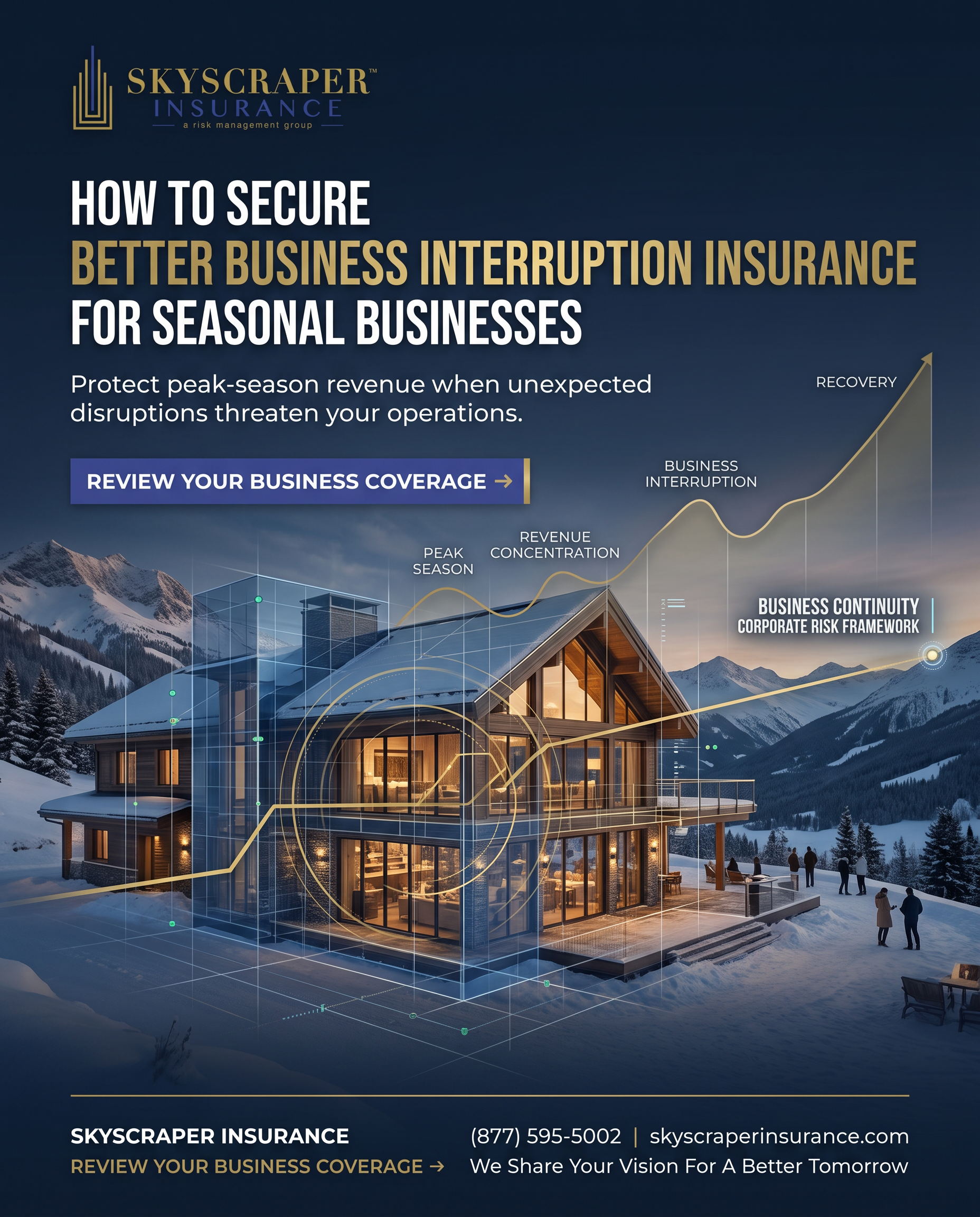
For seasonal enterprises, ranging from winter ski resorts, holiday pop-up retailers, and event venues to coastal hospitality operators entering winterized dormancy, business success is defined by dynamic revenue concentration. Rather than generating smooth, annualized operational cash flows, seasonal businesses often earn between 60% and 90% of their annual operating income within a compressed window of three to five months.
This revenue compression introduces severe underwriting and operational risk. A major physical loss, unexpected supplier shutdown, or premises liability lawsuit occurring during peak season cannot simply be recouped in subsequent quarters; it can jeopardize the entire annual balance sheet. Conversely, transitioning into dormancy introduces unique cold-weather preservation, vacancy, and off-season surveillance risks that traditional insurance forms routinely penalize.
Relying on generic, static commercial package policies (CPPs) exposes seasonal enterprises to costly coverage friction. Standard insurance forms assume level, 12-month payrolls, constant inventory balances, and continuous building occupancy.
At Skyscraper Insurance, we deliver forensic risk engineering tailored to seasonal operating models.
1. Structural Vulnerabilities Unique to Seasonal Operating Cycles
Standard commercial policies frequently fail under these distinct pressures:
- Fluctuating Inventory and Co-Insurance Penalties: During peak season, inventory values surge to handle anticipated consumer demand, then plummet as the operational window closes. If an enterprise carries a fixed personal property limit governed by an 80% or 90% co-insurance clause, an unexpected fire during peak stock levels will trigger severe co-insurance penalties, leaving the policyholder to absorb a substantial percentage of the physical loss out of pocket.
- The 12-Month Business Interruption Disconnect: Traditional business interruption policies calculate lost revenue using rigid trailing 12-month averages or standard monthly indemnity limits (such as a 1/3, 1/4, or 1/6 monthly cap). If a catastrophic loss halts operations during a four-month peak period, a standard monthly limitation severely restricts claim recovery to a fraction of actual lost earnings.
- Seasonal Workforce and Workers’ Compensation Audits: Seasonal surges demand rapid hiring of temporary, part-time, or student workforces. High employee turnover, inadequate on-boarding safety protocols, and rushed shifts drive high frequency workers’ comp claims. At year-end audit, misclassified seasonal payrolls or unbudgeted payroll spikes trigger painful, retroactive premium demands.
The Seasonal Interruption Reality:
A standard commercial business interruption claim compensates for the physical time it takes to repair a damaged building. For a seasonal operator, a four-month restoration period that spans November through February destroys 100% of the year’s revenue, yet standard coverage will not pay for lost income after the doors reopen in March when customer demand has completely evaporated.
2. Technical Pillars of a Tailored Seasonal Insurance Program
Protecting seasonal enterprises requires structuring specialized insuring agreements that adapt dynamically to changing cash flows and physical occupancy:
Peak Season Inventory Endorsement & Monthly Reporting Value Forms
Rather than purchasing an expensive, static property limit that covers maximum peak inventory year-round, businesses should secure a Peak Season Inventory Endorsement. This provision automatically increases property coverage limits by a designated percentage (e.g., 25% to 50%) during specified high-volume months without charging full annualized premiums. Alternatively, a Value Reporting Form allows the business to pay premiums based strictly on actual monthly inventory reports, guaranteeing 100% indemnification without overpaying during dormant months.
Extended Period of Indemnity & Seasonal Business Income Architecture
A properly engineered business interruption form must eliminate arbitrary monthly limitation caps and include an Extended Period of Indemnity Endorsement (ranging from 180 to 365 days). This critical provision ensures that claim payouts continue after physical reconstruction is complete until customer traffic, booking pace, and market reputation recover to pre-loss projections.
Affirmative Vacancy & Seasonal Shutdown Permits
To prevent coverage suspensions during off-season downtime, insurance programs must include an explicit Seasonal Unoccupancy Permit or affirmative endorsement acknowledging that the premises undergo planned operational closures. Coordinating this wording with proactive risk mitigation, such as automated smart-water shut-off valves, low-temperature cellular telemetry, and off-season perimeter surveillance, keeps property coverage fully enforceable year-round.
Dynamic Pay-As-You-Go Workers’ Compensation
Eliminate unexpected year-end payroll audit shocks by transitioning Workers’ Compensation programs to real-time, payroll-integrated Pay-As-You-Go structures.
Static Retail Policies vs. The Skyscraper Seasonal Standard
Review how an engineered seasonal risk architecture compares against conventional commercial package policies:
| Operational Dimension | Static Commercial Package Policy | The Skyscraper Seasonal Architecture | Balance Sheet Advantage |
| Inventory Spikes | Fixed annual limit with rigid 80%/90% co-insurance clauses. | Peak Season Endorsement or Value Reporting Form: Limits adjust to inventory levels. | Eliminates co-insurance penalties while optimizing off-season premium spend. |
| Income Recovery | Trailing 12-month average with standard monthly caps. | Seasonal Business Interruption with Extended Period of Indemnity: Custom earnings curve. | Replaces actual peak-season revenue and sustains payroll through off-season recovery. |
| Facility Dormancy | Automatic suspension of water/theft coverage after 60 days vacant. | Affirmative Seasonal Unoccupancy Permit: Paired with IoT thermal/water telemetry. | Maintains uninterrupted property protection during planned operational shutdowns. |
| Seasonal Payroll | Estimated annual payroll with painful retroactive audits. | Real-Time Pay-As-You-Go Workers’ Comp: Automated payroll reporting integration. | Matches premium outlays to actual cash flow and eliminates audit surprises. |
Take Control: Learn More
Operating a seasonal business requires agility, discipline, and exact timing.
At Skyscraper Insurance, we specialize in commercial risk engineering, dynamic business interruption modeling, and portfolio risk management. Our advisors conduct forensic policy audits, evaluate seasonal operational cycles, align fluctuating inventory and payroll structures, and place manuscripted programs with top-rated global underwriters.
Is your seasonal business protected by an insurance architecture designed for your actual operating cycle, or will a rigid policy exclusion compromise your peak-season revenue?
Take command of your operational resilience today. Connect with our commercial advisory team and Learn More. We will perform a comprehensive, confidential audit of your active commercial policies, inventory reporting structures, and business interruption limits to ensure your balance sheet remains fully protected in every season.
Visit us at Skyscraper Insurance to schedule your seasonal business review today.