The insurance claims environment has entered a period of unprecedented volatility and structural complexity. In an era marked by catastrophic weather patterns, tangled global supply chains, multi-jurisdictional liability disputes, and social inflation driving record litigation verdicts, the claims lifecycle is no longer a straightforward administrative transaction. Today, a single commercial claim can involve thousands of pages of unstructured data, multiple liability towers, complex forensic engineering reports, and overlapping indemnification contracts.
As claims complexity surges, traditional manual processing models are struggling under the strain.
When claims handlers are forced to spend days manually triaging First Notice of Loss (FNOL) reports, cross-referencing complex manuscript policy language, and parsing hundreds of repair invoices, cycle times drag out, claims leakage accelerates, and customer frustration mounts.
Artificial Intelligence is no longer just an experimental efficiency tool—it is rapidly becoming the essential operational foundation for modern claims adjudication. At Skyscraper Insurance, we look closely at how advanced technologies are reshaping the risk transfer ecosystem. Understanding the future of complex claims requires examining the symbiotic relationship between machine intelligence and human expertise.
1. The Anatomy of Modern Claims Complexity
Why have claims become so difficult to manage? The challenge stems from a convergence of physical, economic, and legal pressures reshaping property and casualty (P&C) lines:
- Social Inflation & Litigation Trends: Aggressive plaintiff bar strategies, expanding third-party litigation funding, and shifting jury sentiments have inflated casualty settlement costs and extended legal timelines.
- Unstructured Data Overload: Adjusters are inundated with multi-gigabyte digital files—drone aerial scans, telematics streams, IoT environmental sensor logs, thermal imaging, and contractor estimates.
- Cross-Disciplinary Perils: A single loss event—such as a major factory fire or a supply chain interruption—often cuts across property damage, contingent business interruption, environmental liability, and product warranty lines simultaneously.
Attempting to resolve these multi-layered files using legacy legacy workflows creates costly bottlenecks and increases the risk of erroneous reserve estimates.
2. The AI-Powered Claims Engine: From Reactive to Anticipatory
Integrating machine learning, natural language processing (NLP), computer vision, and large language models (LLMs) transforms claims management from a reactive exercise into an anticipatory, high-velocity workflow.
The Hybrid Claims Model:
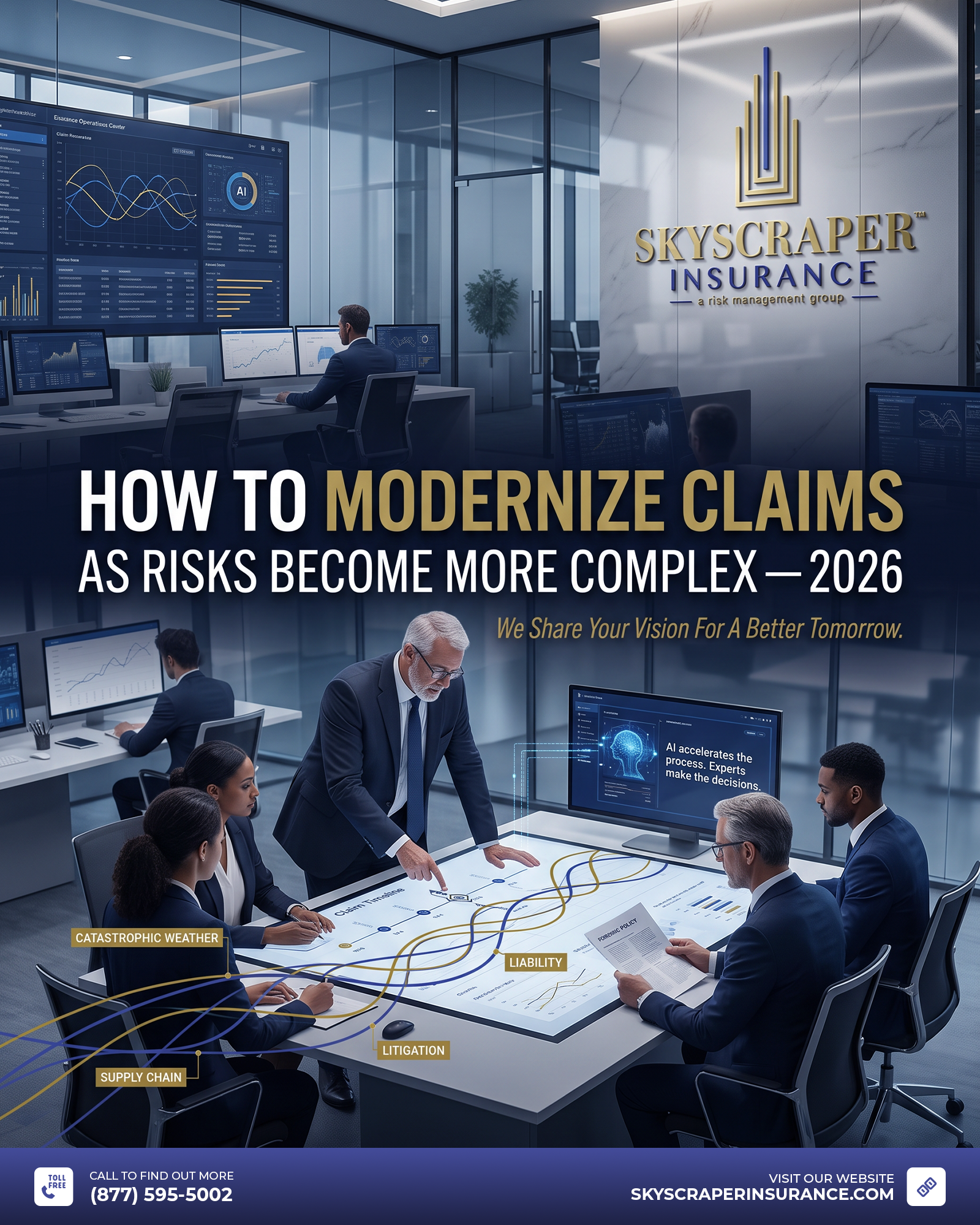
AI does not replace the critical judgment, negotiation skills, and empathy of experienced claims adjusters. Instead, it acts as an intelligent co-pilot—automating high-volume administrative tasks, detecting hidden data patterns, and organizing unstructured evidence so human specialists can focus on strategic case resolution and client care.
Intelligent Triage & Early Severity Detection
From the instant an FNOL is submitted, predictive algorithms analyze text, photos, and historical loss datasets to score claim severity. Instead of waiting weeks for a file to escalate, high-risk claims with litigation potential or complex coverage questions are immediately routed to senior specialist adjusters.
Automated Forensic Document Synthesis
Modern LLMs and document-parsing engines can extract and cross-reference thousands of pages of medical records, architectural blueprints, and policy endorsements in seconds. They highlight potential coverage exclusions, calculate depreciation schedules, and verify contractor pricing against regional indices.
Anomaly & Fraud Pattern Recognition
Insurance fraud accounts for tens of billions of dollars in annual losses across the industry. AI-driven fraud detection models scan cross-channel datasets in real time—identifying organized claim ring patterns, digitally manipulated photos, and invoice anomalies long before claim funds are disbursed.
Traditional Claims Processing vs. The AI-Enabled Standard
See how the integration of artificial intelligence elevates each stage of the complex claims lifecycle:
| Claims Touchpoint | Traditional Manual Model | The AI-Enabled Future | The Strategic Value |
| First Notice of Loss (FNOL) | Manual form entry and delayed multi-day assignment queues. | Instant Multi-Channel Ingestion & Smart Routing: AI analyzes damage inputs and routes directly to specialist adjusters. | Slashes initial triage cycle times from days to minutes. |
| Damage & Scope Evaluation | On-site inspections with physical tape measurements and delayed reports. | Computer Vision & Aerial Geospatial Scanning: High-res drone and mobile imagery scored instantaneously. | Delivers objective damage assessments and cuts inspection friction. |
| Document & Evidence Review | Adjusters manually review hundreds of PDF invoices, reports, and records. | Generative AI Summarization & Clause Matching: Automatic comparison of loss facts against policy endorsements. | Frees adjusters to handle strategic negotiation and settlement execution. |
| Reserving & Litigation Risk | Subjective, static reserve calculations based on baseline averages. | Dynamic Predictive Reserve Modeling: Algorithms forecast true ultimate claim costs and litigation likelihood. | Prevents sudden reserve shock and mitigates unexpected claims leakage. |
Take Control: Learn More
As risk landscapes grow more intricate, the future of insurance resilience belongs to organizations that embrace data-driven agility. For policyholders, understanding how modern claims technology operates ensures smoother settlement outcomes, transparent coverage verification, and faster recovery when disaster strikes.
At Skyscraper Insurance, we continuously evaluate the cutting-edge intersections of insurtech, risk engineering, and specialized commercial coverage. Whether you are managing complex commercial property exposures, multi-layered liability towers, or enterprise supply chains, our team helps you structure coverage built to perform seamlessly when a loss occurs.
Are your corporate coverage structures and risk management strategies prepared to navigate the modern claims landscape?
Don’t let outdated coverage terms or complex claims friction disrupt your enterprise continuity. Connect with our commercial risk advisory team today to explore how modern risk architecture can protect your bottom line, and Learn More.
Visit us at Skyscraper Insurance to discover forward-looking risk management solutions today.