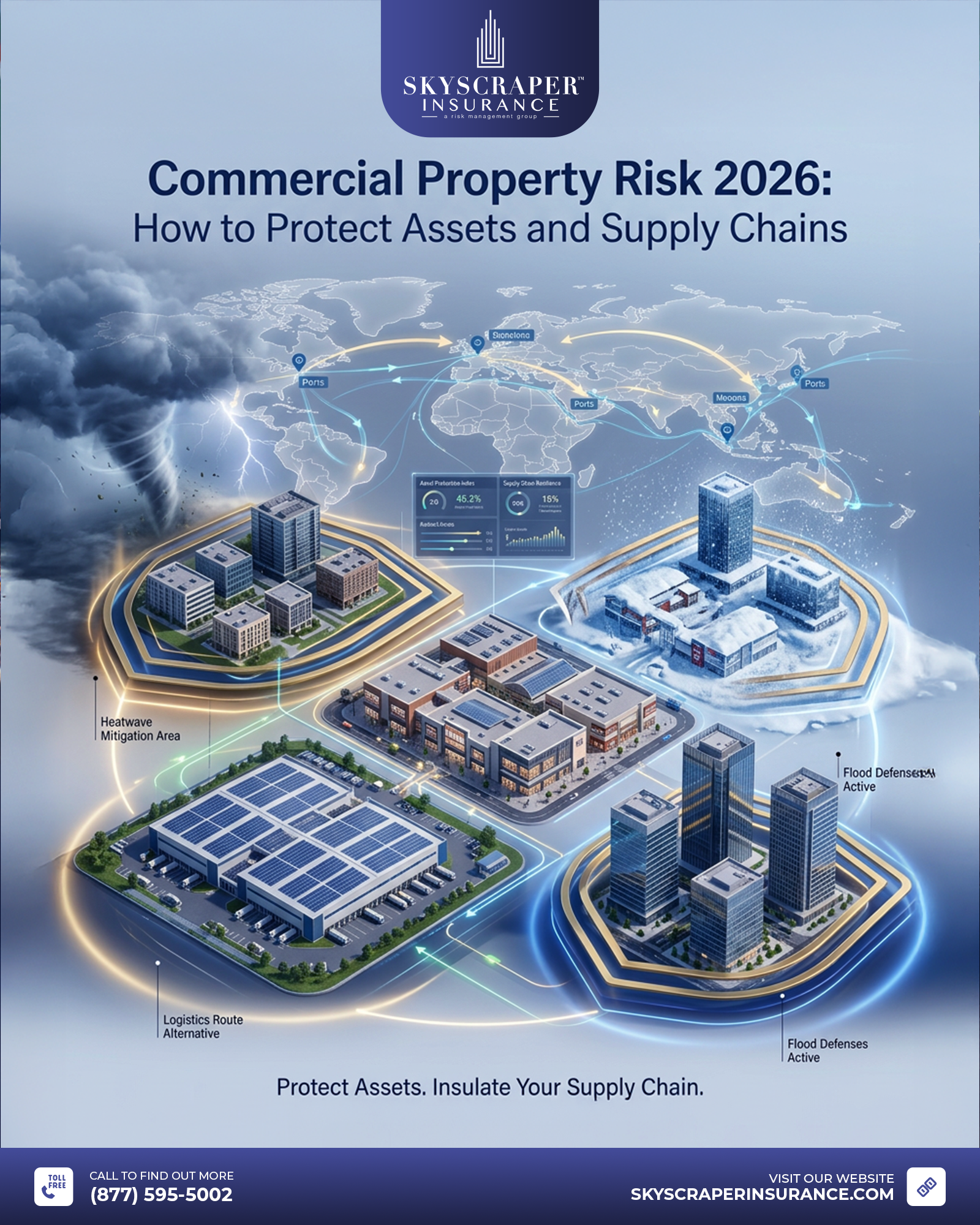
Weather patterns are no longer as predictable as they once were. For commercial enterprises, property developers, and logistics leaders, the transition between fiscal seasons is no longer just a calendar change—it is a direct encounter with atmospheric volatility. Whether you are prepping for summer’s high-temperature operational stress, atmospheric river flooding, grid failures, or heading into a brutal winter freeze, weather is one of the most disruptive forces hitting corporate balance sheets today.
Yet, far too many executives treat weather risk as an unpreventable “act of God”—a passive event you simply clean up after.
That mindset is an expensive corporate gamble. Relying on an insurance policy structured during a quiet operational period to survive a catastrophic seasonal surge means you are flying blind into peak vulnerability months.
At Skyscraper Insurance, we look at seasonal transitions through a hard metric of asset protection. True corporate resilience isn’t about watching the radar in fear; it’s about engineering your risk portfolio beforehand so your coverage, your physical properties, and your supply chains are completely insulated from environmental disruptions.
1. The Dynamic Volatility of Seasonal Exposures
When a major seasonal weather front approaches, your operational footprint alters instantly. A construction company ramps up outdoor project milestones, a logistics firm logs thousands of additional road miles to meet a holiday surge, and manufacturing plants run heavy machinery at maximum capacity, straining regional power grids.
In the insurance underwriting universe, altered operations mean shifted loss probabilities.
Consider how seasonal shifts silently compromise your property and liability protections:
- The Utility Interruption Threat: If a massive heatwave or ice storm triggers a regional grid failure, a standard property policy only covers physical structural damage. If your inventory spoils or production halts because the local utility company’s substation went down miles away, you face a massive un-payable operational loss unless you carry a dedicated Utility Services – Time Element endorsement.
- The Contingent Business Interruption Gap: A severe localized storm doesn’t even have to hit your facility to break your business. If a critical microchip supplier or raw material distributor in another state is wiped out by a seasonal tornado or flood, your revenue drops instantly. Contingent Business Interruption (CBI) is the specific safety net required to replace your lost income when a key third-party vendor is paralyzed by a property disaster.
2. Structural Tuning: Critical Policy Adjustments for Changing Seasons
To build an organization capable of staying completely ahead of the storm, your executive leadership team must move past generic policy binders and implement seasonal structural adjustments:
Parametric Insurance Upgrades
Traditional property insurance requires a lengthy physical damage assessment by an adjuster, leaving your cash flow stranded for months following a major storm. Parametric Insurance cuts through this delay entirely. It pays out a pre-agreed, fixed financial sum the exact moment a weather event hits a specific, measurable threshold—such as a Category 3 hurricane crossing a precise geographical coordinate or rainfall exceeding a designated metric. No adjustments, no arguments, just instant liquidity when your business needs it most.
Flood vs. Surface Water Deductible Alignment
Many policyholders are shocked to learn that standard commercial property policies feature complex, split deductibles for water damage. A pipe burst inside a wall carries a standard flat deductible, while damage stemming from an external flash flood or surface water runoff shifts to a percentage-based deductible—often 2% to 5% of the total insured value of the building. Aligning these thresholds before storm season prevents a catastrophic out-of-pocket surprise.
The Seasonal Resilience Matrix: Weather Threats vs. Policy Alignment
To help your operations and risk management teams execute a clean structural check before the weather shifts, review our exposure alignment matrix:
| Seasonal Operational Reality | Hidden Risk Exposure | The Necessary Policy Alignment | The Strategic Advantage |
| Scaling Temporary/Seasonal Labor Contracts | Inexperienced staff triggering severe machine damage or bodily injuries. | Temporary Worker Endorsements & Safety Audits: Direct inclusion of non-permanent payrolls in core GL/WC tiers. | Liability Insulation: Eliminates coverage disputes regarding the exact legal status of injured staff. |
| High-Temperature Machinery Run-Times | High-load HVAC, electrical switchgear, or refrigeration compressor failures. | Equipment Breakdown Insurance: Covers the diagnostic repair costs and consequential business income losses. | Asset Protection: Bypasses standard property exclusions regarding internal electrical arc or mechanical breakdown. |
| Expanded Regional Logistics Fleet Hours | Increased road miles logged during severe convective storm or ice conditions. | Hired & Non-Owned Auto (HNOA) Overhaul: Adjusts your corporate auto safety nets to match real-time road exposure volumes. | Balance Sheet Defense: Blocks plaintiffs’ attorneys from targeting corporate reserves following an employee vehicle crash. |
| Holding Peak Seasonal Inventory Valuations | Storing millions in extra stock ahead of a major consumer demand window. | Peak Season Limit Endorsement: Automatically increases property contents limits by a designated percentage during peak months. | Capital Preservation: Eliminates underinsurance penalties without forcing you to pay for high limits all year round. |
Take Control: Book a Seasonal Policy Review
You shouldn’t run a business hoping the weather cooperates with your financial targets. True market leadership requires active risk engineering. Before the next major weather pattern shifts, it is time for an insurance reality check to eliminate hidden exposure gaps and align your policy limits with modern replacement costs and real-time operational flows.
At Skyscraper Insurance, we don’t believe in passive risk management. Our dedicated commercial advisors practice continuous advocacy. We cross-examine your current vendor networks, audit your property valuation thresholds, stress-test your business interruption timelines, and structure optimized weather defenses that safeguard your growth through any environmental surge.
Are your corporate limits actively protecting your real-time operational footprint, or are you carrying liabilities on outdated numbers?
Don’t let a seasonal weather event turn into an uninsured corporate disaster. Reach out to our specialized advisory team today and book a seasonal policy review. We will run a comprehensive operational check, fortify your asset protections, and ensure your business stays completely ahead of the storm.