
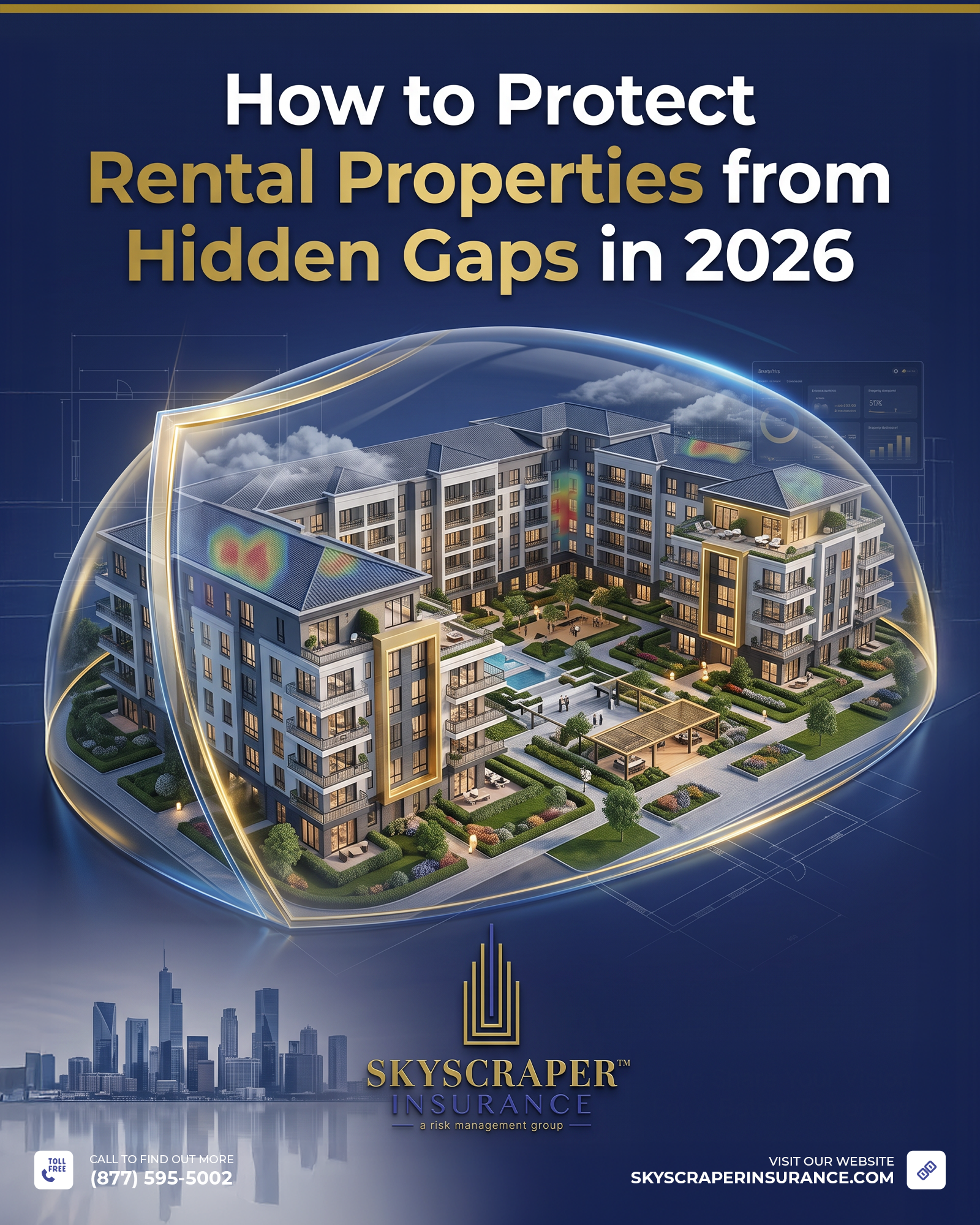
The multi-family housing sector is undergoing a massive evolution. Whether you manage a boutique row of urban apartments, a high-density suburban complex, a mixed-use residential tower, or a portfolio of HUD-subsidized multi-family properties, your enterprise operates at the intersection of real estate investment and community stewardship. You aren’t just managing physical bricks and mortar—you are providing safe, functional homes for dozens, hundreds, or thousands of residents.
However, high tenant density brings compounding operational exposures.
A single kitchen fire in an upper unit, an undetected plumbing burst behind a shared wall, an slip-and-fall accident on an icy common walkway, or an administrative oversight regarding HUD compliance can instantly jeopardize your entire revenue stream. In the modern multi-family ecosystem, relying on basic, generic commercial property policies is a structural gamble that leaves your equity exposed.
At Skyscraper Insurance, we look past generic property binders to evaluate your true multi-family risk architecture. Managing residential properties requires a specialized protective shield designed to handle high tenant turnover, complex regulatory structures, and high-density liabilities. To safeguard your yield and your real estate portfolio, you need to go beyond basic property management: don’t just rent—protect.
1. The HUD & Affordable Housing Reality: Strict Compliance vs. Standard Binders
Operating multi-family properties under Department of Housing and Urban Development (HUD) guidelines or local affordable housing programs brings unique operational advantages—alongside strict regulatory oversight. HUD-backed loans (such as FHA multi-family financing) enforce rigid insurance mandates regarding liability limits, building replacement valuations, loss-of-rent coverage, and earthquake/flood endorsements.
If your insurance carrier fails to issue binders that align precisely with current HUD handbook requirements, you risk loan covenant default, delayed refinancing, or severe financial penalties.
The Regulatory & Maintenance Exposure:
HUD and municipal housing authorities maintain stringent physical inspection standards (such as NSPIRE guidelines). If an uninsured physical defect leads to a tenant injury, or if a covered property loss forces the temporary displacement of subsidized residents, standard commercial policies routinely fail to cover specialized tenant relocation costs or statutory administrative fines.
A specialized HUD & Multi-Family Insurance Strategy ensures complete alignment between your physical asset protection, loss-of-rent mechanisms, and federal compliance mandates.
2. The Core Pillars of Multi-Family Asset Protection
To construct an ironclad defensive perimeter around your residential portfolio, your insurance framework must utilize three critical pillars:
High-Limit General & Habitability Liability
Multi-family operators face a continuous stream of third-party liability claims. Standard general liability policies cover basic slip-and-fall incidents, but they frequently contain restrictive exclusions for habitability claims—such as allegations of mold, pest infestations, carbon monoxide exposure, or security failures leading to criminal acts on premises. Securing comprehensive Habitability Liability and Tenant Discrimination coverage ensures your management company and property owners are fully protected in tenant-led litigation.
Building & Business Income with Loss of Rents Coverage
When a catastrophic fire, storm, or pipe burst renders several units uninhabitable, your rental income drops immediately, but your mortgage obligations, property taxes, and staff payroll remain fixed. Loss of Rents protection replaces your gross rental income for up to 12, 18, or 24 months during structural repairs, ensuring your cash flow remains stable while contractors restore the property.
Tenant Liability & Master Program Integration
One of the highest sources of property loss stems from tenant negligence—such as unattended cooking, improper space heater use, or overflowing bathtubs. By integrating a Master Tenant Liability Program or enforcing mandatory Renters Liability requirements, property managers ensure that tenant-caused physical damage is absorbed by tenant-side policies first, preserving the property owner’s primary loss history and keeping commercial premiums low.
The Multi-Family Resilience Matrix: Property Hazards vs. Specialized Defenses
To help your asset management team or board audit your current multi-family footprint, see how optimized property policies respond to high-density residential perils:
| The Multi-Family Peril | The Standard Un-Audited Reality | The Skyscraper Multi-Family Shield | The Strategic Advantage |
| A major kitchen fire destroys four units in a 40-unit building. | Rental Revenue Blackout. Property insurance pays for the physical build, but lost tenant rent is excluded or capped low. | Actual Loss Sustained (ALS) Loss of Rents Coverage: Replaces lost monthly rental income throughout the entire repair timeline. | Debt Service Protection: Keeps mortgage payments and investor distributions fully funded during construction. |
| A displaced tenant files a habitability lawsuit alleging toxic mold. | Denied Claim. Standard commercial general liability contains strict “Fungi/Bacteria” exclusions. | Habitability & Mold Endorsement: Covers legal defense fees, environmental remediation, and tenant settlement costs. | Reputational Safety: Prevents class-action tenant lawsuits from eroding property value and brand standing. |
| A storm floods a basement utility room, destroying HVAC units. | Underinsured Equipment. Baseline property policies apply heavy depreciation to older mechanical systems. | Equipment Breakdown & Ordinance or Law Endorsement: Funds full replacement with modern, code-compliant equipment. | Asset Modernization: Covers forced building code upgrades required by local municipal inspectors during repairs. |
Take Control: Check Your Multi-Family Policy
You wouldn’t acquire a residential complex without conducting thorough physical and financial due diligence, and you shouldn’t manage your real estate assets with outdated or generic insurance paperwork. High tenant density and evolving HUD compliance standards leave no room for coverage gaps or un-audited exclusions.
At Skyscraper Insurance, we specialize in forensic risk architecture for multi-family property owners, HUD housing providers, real estate investment trusts (REITs), and property management firms. We skip generic templates to analyze your lease agreements, audit your building replacement valuations, review your HUD financing covenants, and engineer a protective shield that preserves your yields.
Are your residential properties and rental income streams completely insulated, or are you one tenant accident or regulatory audit away from a massive cash drain?
Don’t wait for a major property loss or compliance issue to test the limitations of your binders. Take command of your portfolio continuity today, connect with our commercial real estate advisory team, and say, “Check your multi-family policy.” We will execute a confidential gap analysis on your active lines, optimize your premium structures, and ensure your housing enterprise is built to deliver steady returns.




2 Comments
The discussion shared valuable insight into this subject when I needed it most and I look forward to reading more from you
This article gave me a refreshing way to understand the issue today and I look forward to reading more from you