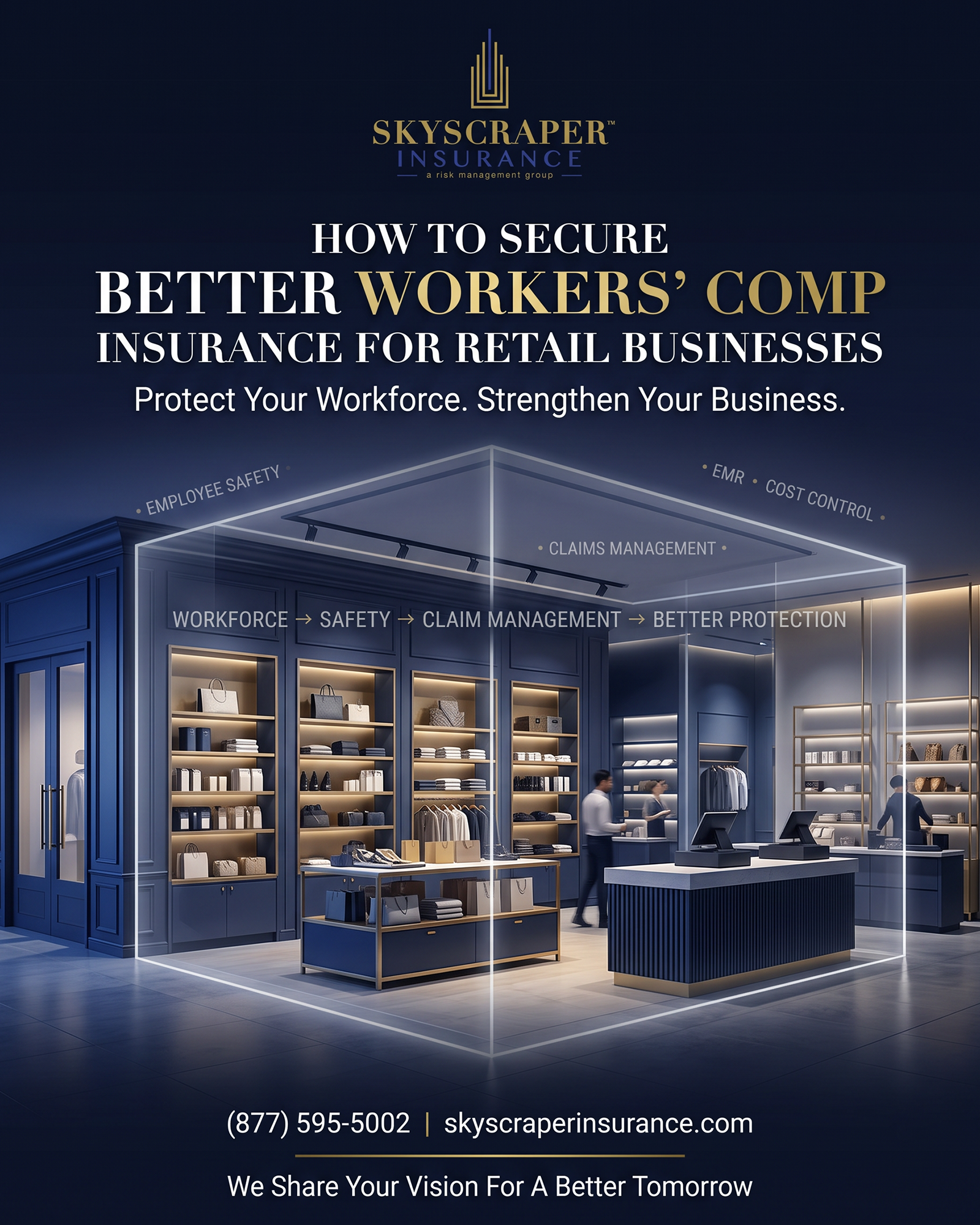
The retail industry thrives on constant movement, direct customer interaction, and fast-paced operational workflows. From multi-unit retail apparel storefronts and regional supermarkets to specialty showrooms and consumer electronics boutiques, success depends entirely on the floor teams stocking shelves, assisting shoppers, and managing registers.
Viewing retail workers’ comp as an off-the-shelf commodity is a critical mistake that erodes net operating margins.
Retail operations present a unique risk profile characterized by high employee turnover, seasonal headcount surges, and distinct physical hazards.
1. High-Frequency Injury Drivers in Modern Retail
Retail environments rarely generate the dramatic catastrophic losses seen in heavy manufacturing or industrial construction. Instead, retail loss runs are driven by high-frequency cumulative injuries that drive up insurance loss costs over time:
- Manual Material Handling & Stockroom Strains: Unloading delivery trucks, lifting heavy shipping cartons, and restocking display shelves create continuous stress on the lower back, neck, and shoulders. Musculoskeletal strains and repetitive lifting tears represent the single largest share of retail indemnity claim payouts.
- Repetitive Stress & Cashier Fatigue: Cashiers, checkout associates, and inventory barcode-scanning teams execute thousands of repetitive wrist and arm movements each shift, frequently leading to carpal tunnel syndrome and chronic tendonitis claims.
The Seasonal Payroll Volatility Trap:
Retail staffing expands dramatically during fourth-quarter holiday sales, promotional events, and summer inventory cycles. If your policy is built on an upfront estimated annual payroll, you face cash-flow strain from unnecessary upfront premium deposits, followed by severe financial penalties when annual carrier payroll audits take place.
2. Technical Pillars of a Tailored Retail Workers’ Comp Architecture
Controlling retail workers’ comp expenses requires moving beyond basic renewals to execute proactive risk engineering:
Precise NCCI Payroll & Class-Code Segregation
Standard retail stores are often defaulted by carriers into broad rating tiers like NCCI Code 8017 (Retail Store – General Merchandise). However, applying this rate across your entire organization causes substantial premium inflation. Maintaining strict operational separation between clerical administration (Code 8810), outside delivery/sales drivers (Code 7380), and distinct warehousing/wholesale distribution (Code 8018) ensures you pay hazard rates only on the payroll exposed to actual physical retail risks.
Integrated Pay-As-You-Go Cash Flow Management
Eliminate the unpredictability of upfront estimated deposits and year-end audit adjustments. A modern Pay-As-You-Go structure synchronizes your insurance carrier directly with your digital payroll platform. Premiums are calculated on actual gross payroll processed every pay period: when staffing scales back, insurance costs contract instantly; when seasonal hours ramp up, premiums adjust transparently in real time.
Structured Modified-Duty & Early Return-to-Work Protocols
Your Experience Modification Rate (EMR) reflects your three-year loss history and serves as a direct multiplier on your base premium. The fastest way to lower an EMR is to reduce lost workdays.
Standard Commercial Package vs. The Skyscraper Retail Solution
Review how a tailored workers’ compensation architecture outperforms generic retail policies:
| Program Element | Generic Commodity Policy | The Skyscraper Retail Architecture | The Operational Advantage |
| NCCI Classification | Broad, blanket application of Code 8017 to all staff members. | Forensic Class-Code Audits: Strict segregation of clerical (8810) and executive roles. | Eliminates unnecessary rate surcharges across non-sales floor staff. |
| Cash-Flow Terms | Substantial upfront estimated deposits and surprise audit invoices. | Live Pay-As-You-Go Integration: Automated calculation tied to real-time payroll runs. | Preserves working capital and eliminates unexpected year-end audit bills. |
| Claims Mitigation | Passive carrier processing leading to extended employee disability time. | Active Return-to-Work Playbooks: Pre-structured light-duty retail roles. | Cuts lost-time claim durations to drive down your EMR below 1.0. |
| Seasonal Staff Ramps | Disorganized onboarding leading to compliance fines and audit disputes. | Dynamic Payroll Tracking: Seamless digital onboarding for temporary workers. | Maintains multi-state compliance while avoiding unbudgeted premium hikes. |
Take Control: Get a Quote
Your front-line retail workforce manages your customer relationships, handles merchandise, and drives revenue every single day. Protecting them from workplace hazards is essential, but doing so should never compromise your operating margins.
At Skyscraper Insurance, we specialize in commercial workforce risk management and tailored insurance architectures for modern retail operators. Our specialists conduct forensic classification audits, resolve payroll reporting discrepancies, design customized light-duty playbooks, and secure competitive terms with leading national carriers.
Are outdated classification codes and unmanaged claims inflating your retail business’s workers’ comp costs?
Stop letting off-the-shelf insurance structures cut into your store’s profitability. Take control of your workforce protection today, connect with our commercial retail advisors, and Get a Quote. We will conduct a thorough policy audit of your active program and design a tailored workers’ comp solution built to protect your team and strengthen your bottom line.
Visit us at Skyscraper Insurance to schedule your retail risk assessment today.