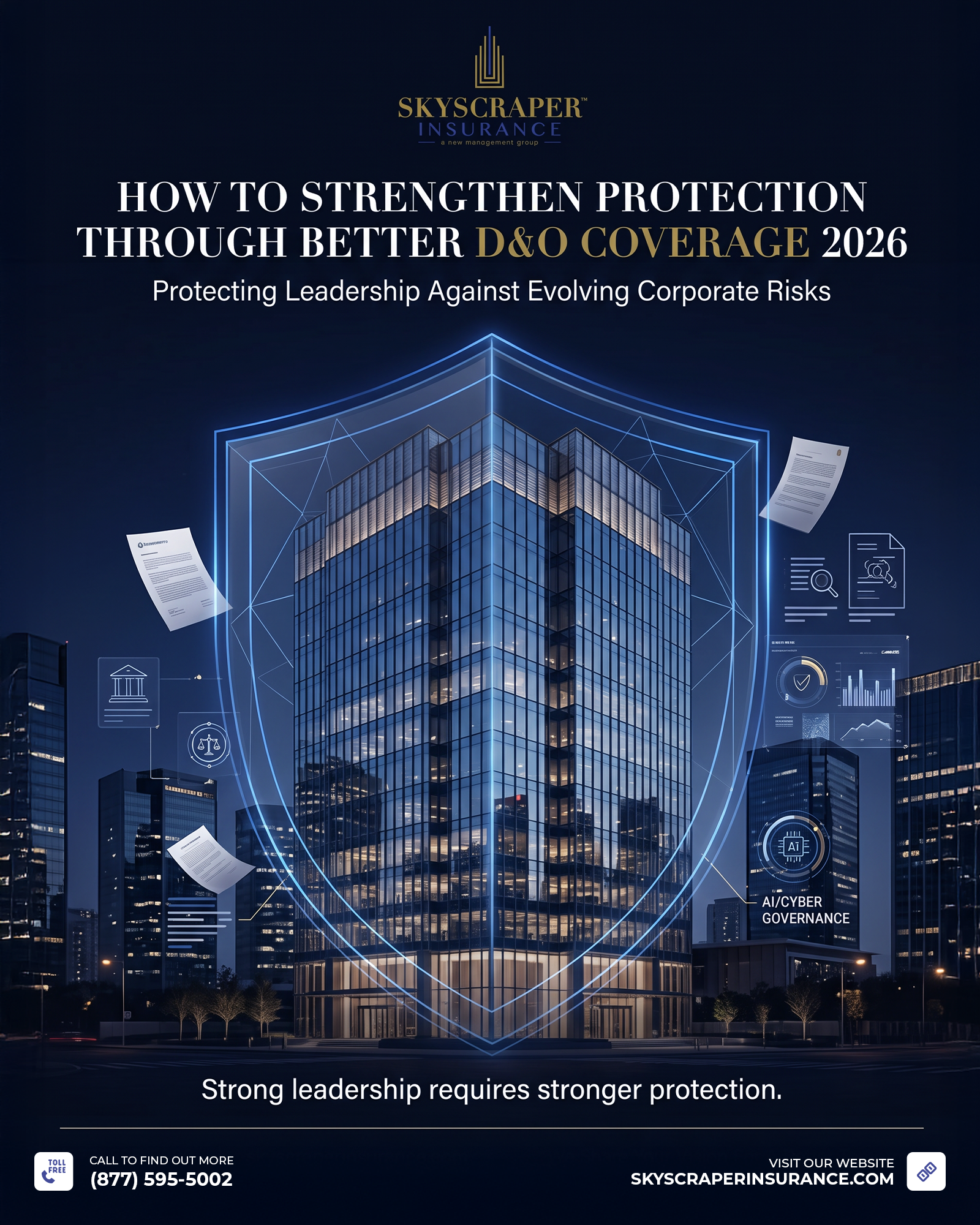
The commercial Directors & Officers (D&O) liability market has entered a phase of clear pricing stabilization, providing corporate boards and financial officers with predictable renewal budgets and expanded capacity across primary and excess towers. However, mistaking stabilized premium rates for diminished executive exposure is one of the most critical governance blind spots facing leadership teams today.
Boardrooms now face a threat matrix dominated by artificial intelligence disclosures, regulatory investigations, cyber incident oversight, and aggressive litigation financing. When premium rates stabilize, carriers rarely compete by loosening manuscript conditions—instead, they manage exposure through tighter excess attachment points, higher retention floors for distressed sectors, and restrictive exclusion carve-outs.
At Skyscraper Insurance, we look past surface-level pricing indices. Market equilibrium offers a rare tactical opening: leveraging available capacity to fortify upper liability layers before catastrophic litigation penetrates the program.
1. The Stability Paradox: Predictable Pricing vs. Escalating Severity
Current pricing equilibrium stems from abundant carrier capitalization, the entry of newer market participants unburdened by prior-year loss development, and aggressive competition across excess layers.
Yet even as rates plateau, claim severity continues to accelerate:
- Securities Class Actions & Regulatory Inquiries: Enforcement agencies are actively scrutinizing corporate reporting and technology claims. Even in matters where formal penalties are never assessed, preliminary defense costs and investigative response fees can exhaust primary limits.
- The “AI-Washing” and Cyber Vector: Shareholder derivative actions increasingly track automated system failures, copyright exposure, and data breach disclosures. In an environment where operational disruptions trigger immediate stock volatility, executive exposure rises sharply.
- Social Inflation in Executive Defense: Protracted legal disputes and growing settlement figures mean multi-layered excess towers are pierced far more frequently than in prior underwriting cycles.
2. Core Pillars of an Optimized D&O Excess Risk Strategy
A stabilized pricing environment represents the prime window to secure broader terms, align excess attachment language, and protect corporate leadership:
Dedicated Side A Difference-in-Conditions (DIC)
Corporate indemnification can freeze during restructuring, insolvency, or derivative actions where state law prohibits the balance sheet from indemnifying officers. A dedicated Side A DIC tower acts as an independent barrier, insulating the personal assets of directors and officers from bankruptcy courts and primary coverage disputes.
Tower Synchronization & Exhaustion Integrity
Excess liability forms must follow primary terms without introducing conflicting restrictions. Auditing excess wording ensures layers recognize partial policyholder payments, drop down upon primary exhaustion, and eliminate restrictive “actual payment” clauses.
Harmonized Cyber and D&O Allocation
Because major security intrusions frequently trigger secondary shareholder derivative lawsuits alleging failure of fiduciary oversight, unaligned cyber and management liability programs create coverage delays. Synchronizing notice conditions and defense provisions across both towers eliminates carrier disputes during active litigation.
Passive Renewal Habits vs. The Skyscraper Excess Standard
Review how active excess risk management compares against standard renewal rollovers:
| Governance Element | Passive Renewal Baseline | The Skyscraper Excess Architecture | Strategic Advantage |
| Pricing Leverage | Accept flat rate renewals and roll over existing liability towers. | Capital Reinvestment: Deploy premium savings to secure higher limits and broader terms. | Expands total corporate protection without inflating top-line risk spend. |
| Excess Layer Drop-Down | Assume upper excess tiers automatically mirror the primary binder. | Harmonized Exhaustion Terms: Removes restrictive actual-payment preconditions. | Ensures immediate excess liquidity during multi-million-dollar settlements. |
| Insolvency Defense | Depend solely on corporate balance-sheet indemnification. | Standalone Side A DIC Limits: Ring-fenced personal coverage outside the estate. | Full personal asset immunity for board members during restructuring. |
| Emerging Perils | Assume legacy wording covers emerging technology and cyber disputes. | Manuscripted Carve-Backs: Clear representation defense for AI and cyber claims. | Insulates directors from regulatory oversight disputes and disclosure actions. |
Take Control: Review Excess Risk
Market stability should never be mistaken for reduced governance risk.
At Skyscraper Insurance, we specialize in corporate governance protection and management liability architecture. Our advisors analyze primary and excess wording, stress-test attachment thresholds against emerging corporate litigation, verify Side A DIC structures, and engineer programs that protect executive assets under extreme litigation pressure.
Does your current D&O program capitalize on market stability, or are your upper excess layers hiding critical coverage gaps?
Don’t wait for a formal regulatory subpoena or shareholder notice to discover that an excess policy won’t respond. Take control of your executive risk architecture today, connect with our management liability team, and Review Excess Risk. We will conduct a thorough forensic audit of your active liability towers to eliminate gaps, optimize terms, and insulate your leadership team.
Visit us at Skyscraper Insurance to schedule your executive liability audit today.