Real Estate Owners: Why Ordinance & Law Coverage Matters
In the world of real estate ownership, we often talk about the vision for your property, the legacy you are building through bricks and mortar. But as a property owner, you know that a single split second incident, like a fire or a natural disaster, can change everything. When a loss occurs, most owners assume their standard property insurance will rebuild their legacy exactly as it was. However, there is a hidden risk that many don’t see until it’s too late: Ordinance & Law coverage.
The Gap: Rebuilding the Past vs. Complying with the Future
Standard property insurance is designed to replace “like-kind and quality.” If your 1980s apartment complex is damaged, the policy pays to restore it to its 1980s specifications. But here is the catch: building codes in 2026 are vastly different than they were decades ago.
When you go to pull a permit for repairs after a major loss, the local building department will likely require you to bring the entire structure up to modern codes. This might mean installing expensive fire sprinkler systems, upgrading electrical panels to meet new safety standards, or adding ADA-compliant ramps and elevators. These code upgrades are not considered “like-kind” and are typically excluded from standard property policies.
The Three Pillars of Ordinance & Law Coverage
To truly protect your legacy and your financial security, you need to understand the three distinct parts of Ordinance & Law coverage:
- Coverage A: Loss to the Undamaged Portion of the Building If 60% of your building is destroyed, local ordinances may require you to demolish the remaining 40% and rebuild the whole thing. Standard insurance only pays for the 60% that was damaged. Coverage A pays for the value of the 40% you were forced to tear down.
- Coverage B: Demolition Cost Standard policies don’t always cover the cost to demolish and clear the undamaged portion of a building. Coverage B covers the expense of leveling the site to make way for the new, code-compliant structure.
- Coverage C: Increased Cost of Construction This is the “heart” of the policy. It pays for the actual “upgrades” required by law, things like energy-efficient windows, modern wiring, or mandatory seismic retrofitting. Without this, these costs come directly out of your pocket.
The Risk: Why Real Estate Owners are Prime Targets for Gaps
Real estate owners often face this danger most when it comes to potential gaps in their coverage. Because building codes are constantly evolving, the gap between your current policy and the higher perspective of actual rebuilding costs grows every year.
If a costly loss occurs and you are hit with $200,000 in mandatory code upgrades that aren’t covered, it can cripple your business and stall your success. You wouldn’t build without a solid foundation; you shouldn’t insure without one either.
Secure Your Property’s Future
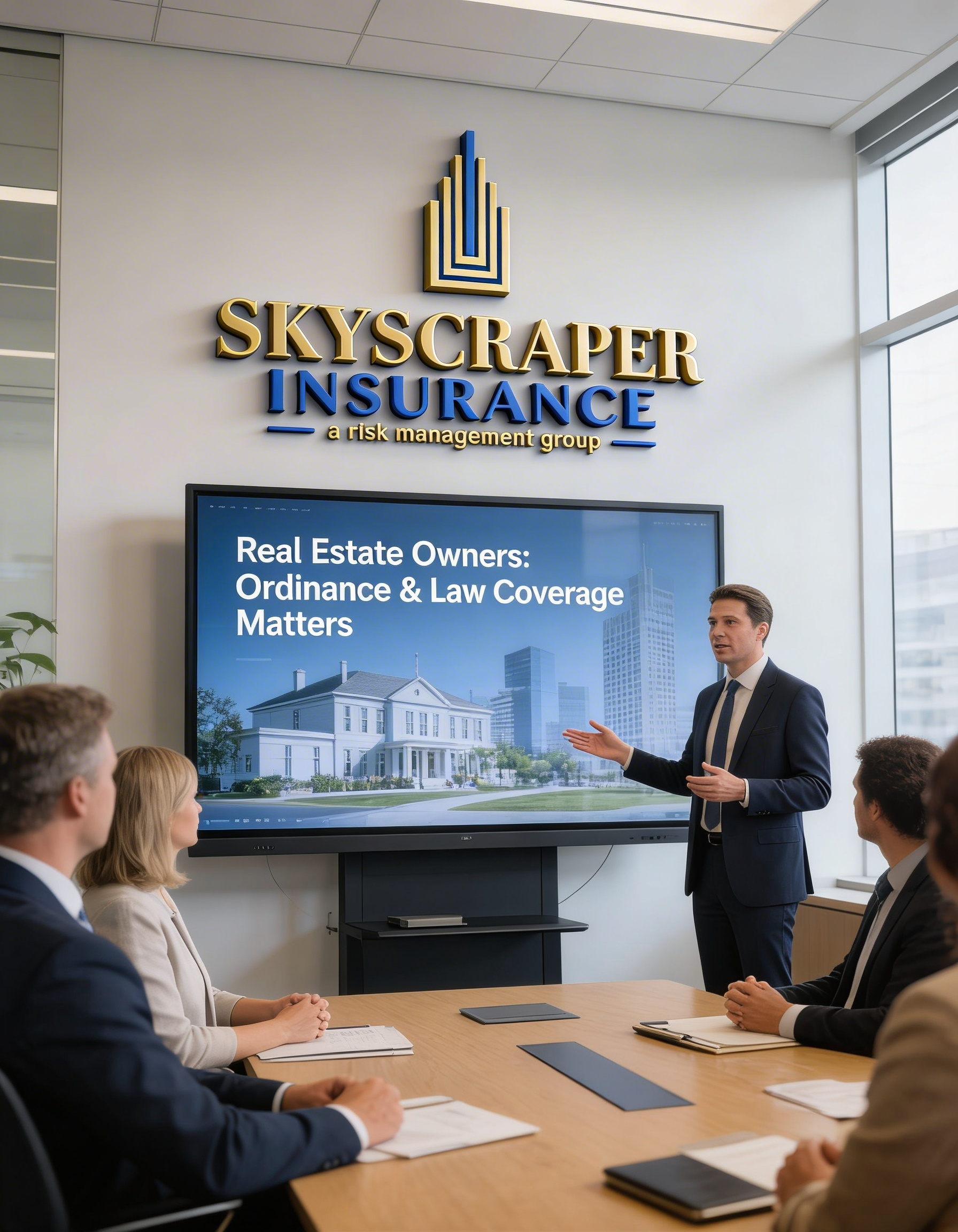
Don’t let a building code requirement turn a manageable loss into a financial disaster. At Skyscraper Insurance, we share your vision for a better tomorrow.
Would you like us to perform a Coverage Gap Check? We will review your current property limits and local building requirements to ensure your Vision is truly protected from the ground up.