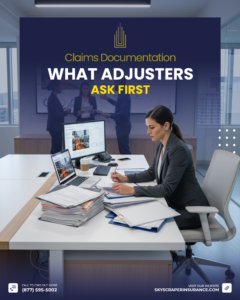
Insurance claims are not won or lost by coverage alone. In many cases, the outcome of a claim is determined by the quality of documentation and how the claim is reported from day one. Even with strong coverage in place, poor documentation, delayed reporting, or inconsistent records can lead to delays, disputes, or reduced claim payments.
Winning claims start long before an adjuster is assigned. They begin with preparation, clear processes, and disciplined documentation practices.
Why Strong Documentation Changes Claim Outcomes
Insurance carriers rely on documentation to evaluate facts, verify coverage, and determine responsibility. When information is incomplete or unclear, adjusters must fill gaps with assumptions, which often work against the insured. Clear, consistent documentation removes uncertainty and supports faster, more favorable claim resolution.
Well-documented claims are easier to investigate, defend, and settle. They reduce back-and-forth, limit disputes, and strengthen your position throughout the claims process.
The First 24 Hours Matter Most
The initial response to an incident sets the tone for the entire claim. Delayed reporting or incomplete first notices of loss are among the most common reasons claims stall. Key details such as date, time, location, parties involved, and a clear description of what happened should be captured immediately.
Photographs, videos, witness statements, and incident reports gathered early are far more reliable than information collected weeks later. Prompt reporting preserves evidence and credibility.
Incident Reports That Actually Help
An effective incident report is factual, detailed, and objective. It should describe what happened without speculation or blame. Opinions, assumptions, or emotional language can complicate claims and create inconsistencies later.
Strong incident reports include who was involved, what occurred, where it happened, when it occurred, and any immediate actions taken. Consistency across reports, statements, and follow-up documentation is critical.
Photos, Videos, and Physical Evidence
Visual documentation often carries significant weight in claims. Photos and videos should capture the scene from multiple angles, showing both close-up details and broader context. Time-stamped images are especially valuable.
Preserving damaged property, equipment, or materials when possible allows adjusters and experts to evaluate losses accurately. Disposing of evidence too early can weaken a claim or lead to disputes over cause and extent of damage.
Medical and Injury Documentation Best Practices
For injury-related claims, medical documentation is essential. Prompt medical evaluation, accurate injury descriptions, and consistent treatment records help establish causation and severity. Gaps in treatment or inconsistent reporting can raise red flags and slow resolution.
Employers should ensure injuries are reported immediately and employees understand the importance of seeking appropriate care and following reporting procedures.
Communication and Claim File Consistency
Consistency across all communications is key. Statements made to carriers, adjusters, employees, or third parties should align with written reports and documentation. Conflicting information can undermine credibility and invite deeper scrutiny.
Maintaining a centralized claim file with all correspondence, reports, invoices, and supporting documents helps ensure nothing is lost or overlooked.
Vendor, Contractor, and Third-Party Documentation
Claims involving vendors or contractors require additional documentation. Contracts, certificates of insurance, indemnification agreements, and scope-of-work details can significantly affect claim responsibility and recovery.
Having these documents readily available allows insurers to pursue subrogation or tender claims appropriately, reducing your financial exposure.
Common Documentation Mistakes That Hurt Claims
Many claims are weakened by preventable mistakes. These include delayed reporting, missing photos, incomplete incident reports, lack of witness information, and inconsistent timelines. Another common issue is failing to document pre-loss condition, which can lead to disputes over damage valuation.
Training staff on documentation basics can prevent these issues and improve outcomes across all claim types.
Building a Repeatable Claims Process
Winning claims consistently requires a repeatable process. This includes clear reporting procedures, assigned responsibilities, documentation checklists, and regular training. When everyone knows what to do after an incident, response becomes faster and more effective.
A structured approach reduces stress during incidents and ensures no critical steps are missed.
How Skyscraper Insurance Supports Strong Claims
Skyscraper Insurance takes an advocacy-driven approach to claims. We help clients implement documentation best practices, review claim submissions, and communicate effectively with carriers. Our team works to ensure claims are positioned clearly and accurately from the start.
We also provide guidance on improving internal processes so future claims are stronger and easier to manage.
Documentation Is the Advantage You Control
You cannot always prevent losses, but you can control how well they are documented. Strong documentation turns coverage into real recovery and transforms claims from frustrating experiences into successful outcomes.
If you want to strengthen your claims process and improve results, now is the time to focus on documentation that makes the difference.