In the commercial world, an organization’s stability is built on predictability—forecasting quarterly yields, balancing operational budgets, and optimizing supply chains. Whether you manage a fast-growing manufacturing plant, a sprawling real estate portfolio, a logistics fleet, or a high-volume retail network, your daily decisions are geared toward steady, measurable expansion.
But the most devastating threat to your enterprise is the variable you cannot see coming.
We are operating in a high-stakes legal climate defined by soaring corporate litigation and unpredictable jury verdicts. A single catastrophic incident—a multi-vehicle highway collision involving a company driver, a severe structural failure at an leased property, an executive data breach, or a freak workplace accident involving a client—can instantly trigger a lawsuit that blows right through your primary policy limits.
Far too many executives treat their standard $1,000,000 liability caps as a definitive safety line. In reality, a standard limit is merely a minor speed bump against modern litigation. When an incident spirals into a multi-million dollar corporate crisis, relying on baseline binders is a structural flaw that can dismantle decades of corporate growth in weeks.
At Skyscraper Insurance, we look past everyday operational exposures to stress-test your absolute worst-case scenarios. True business continuity means building a defense that stands firm when your primary policies are exhausted. True resilience requires asking the ultimate question: are you genuinely ready for the unexpected?
1. The Primary Limit Illusion: Why $1 Million Isn’t Enough
The single most common mistake commercial leaders make is treating individual liability lines as separate, independent fortresses. If your business carries a standard Commercial General Liability (CGL) policy, an Auto Liability policy, and Employers’ Liability coverage, each typically tops out at a standard $1,000,000 limit.
This creates a dangerous illusion of security. If a major disaster occurs, legal defense costs alone can burn through hundreds of thousands of dollars before a settlement is even reached.
The Sequential Drop-Down Reality:
Imagine a delivery van operating on behalf of your company causes a major multi-car highway pileup. The resulting bodily injury and property damage claims quickly mount to $4,500,000.
Your primary commercial auto policy pays out its maximum $1,000,000 limit and instantly goes dark. Without a dedicated Commercial Umbrella policy stacked directly above it, your primary carrier steps away, leaving your corporate bank accounts, your liquid reserves, and your physical properties completely exposed to collection levies for the remaining $3,500,000.
2. The Core Pillars of Comprehensive Umbrella Protection
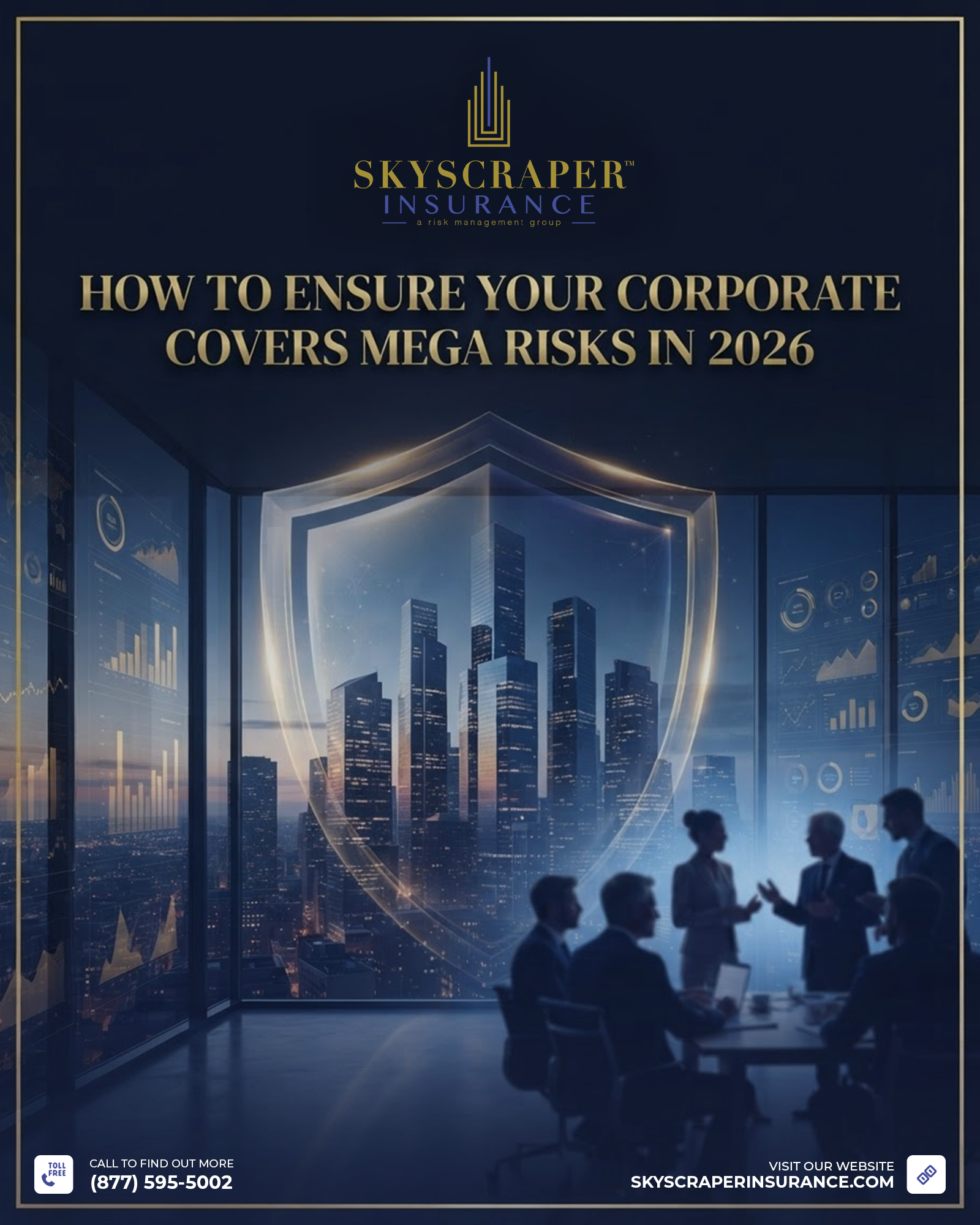
To construct a flawless financial shield that insulates your company from existential litigation, your risk management architecture must utilize three critical pillars:
High-Limit Excess Liability Layering
A sophisticated umbrella strategy goes beyond simple extra coverage. It adds seamless, tiered layers of protection—stacking $5,000,000, $20,000,000, or upwards of $50,000,000 in excess limits directly over your underlying CGL, Auto, and Employers’ liability lines. This creates a unified corporate aggregate cushion that keeps your balance sheet entirely whole through severe, multi-claim crises.
Worldwide Territorial Coverage Extensions
Modern corporate operations are no longer confined by local boundaries. Your executives travel globally, your products cross borders via e-commerce, and your team attends international trade summits. If a catastrophic liability claim is filed against your firm in a foreign court or stems from an incident outside the United States, standard local general liability policies will routinely deny the claim. A premium commercial umbrella policy bridges this gap by extending worldwide territorial defense definitions.
First-Dollar Drop-Down Protection
Standard excess policies only trigger when an underlying policy pays out its full limit. But what happens if your business faces a catastrophic liability claim that is completely excluded by your primary general liability policy, yet is covered by the broader language of your umbrella policy? A high-performing umbrella policy features a Drop-Down Clause. After you pay a self-insured retention (SIR), the umbrella policy drops down to act as primary coverage, funding your legal defense fees from the very first dollar of loss.
The Liability Resilience Matrix: Primary Caps vs. Umbrella Shields
To help your board of directors and risk management teams visualize how excess limits step in to absorb severe losses, review our strategic liability alignment matrix:
| The Catastrophic Peril | The Standard Limit Reality | The Skyscraper Umbrella Solution | The Strategic Advantage |
| A major crowd-surge incident occurs at a corporate event. | Primary Burnout. The $1M general liability limit is exhausted instantly by medical claims. | Commercial Umbrella Stack: Instantly triggers to provide an additional $10M+ in legal defense and settlement liquidity. | Enterprise Insulation: Protects your parent corporation and investors from personal asset exposure. |
| A company executive causes a fatal multi-vehicle auto accident. | Balance Sheet Hit. Court orders a $5M judgment; your auto line caps at $1M, leaving a $4M deficit. | Follow-Form Excess Auto Coverage: Seamlessly drops into place to cover the remaining $4M balance. | Capital Preservation: Prevents forced liquidation of real estate or core equipment to settle a court order. |
| A complex product defect triggers a mass class-action toxic tort. | Exclusion Void. The primary policy faces a complex coverage dispute, freezing your legal team. | Broad Umbrella Drop-Down & SIR Activation: Assumes your legal defense footprint where primary wordings falter. | Litigation Velocity: Secures elite defense counsel immediately to protect your brand’s market reputation. |
Take Control: Learn More About Umbrella Coverage
You wouldn’t construct a commercial facility without building a rock-solid roof to protect it from the elements. Your corporate balance sheet deserves that exact same level of architectural foresight. In today’s high-verdict litigation landscape, secure asset protection isn’t about hoping an accident never happens; it’s about engineering your insurance lines so they absorb catastrophic losses effortlessly.
At Skyscraper Insurance, we practice active, forensic risk forecasting. We don’t believe in generic policy structures or cookie-cutter excess binders. Our dedicated commercial risk advisors sit down with your corporate leadership, analyze your primary policy limits, audit your contractual indemnifications, stress-test your real-world exposures, and negotiate customized, high-limit protections with top-tier, A-rated global excess underwriters.
Are your corporate assets completely insulated from unexpected legal crises, or are you one severe operational accident away from total financial liquidation?
Don’t wait for a devastating multi-million dollar lawsuit to expose the limits of your primary binders. Take absolute command of your enterprise security today, reach out to our commercial advisory team, and learn more about umbrella coverage. We will run a complete, confidential forensic audit of your liability lines, optimize your premium structures, and ensure your business remains built to stand through any crisis ahead.