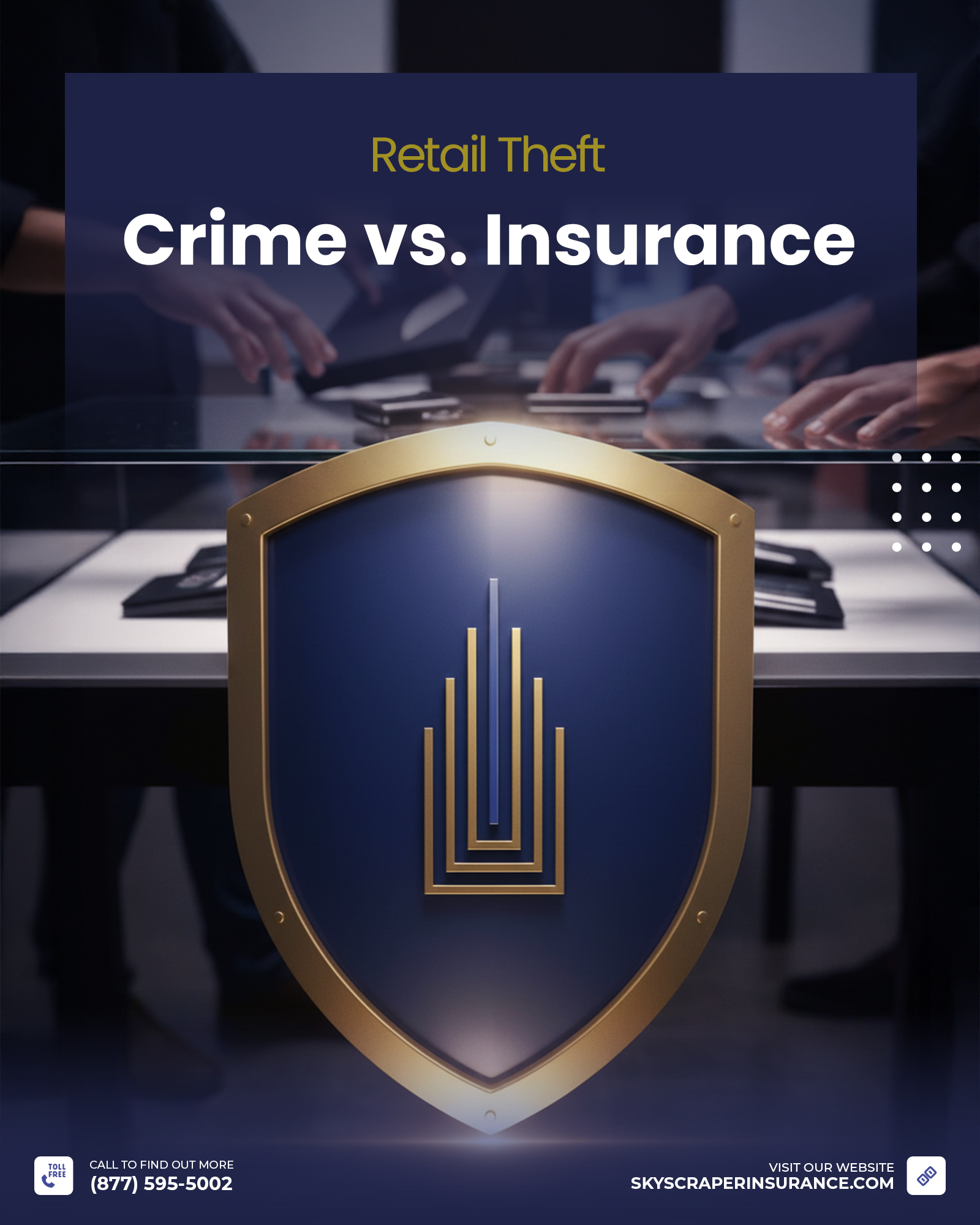
The image of a lone shoplifter slipping a single item into a coat pocket is becoming a relic of the past. Today, the retail landscape is facing a far more coordinated, aggressive, and financially devastating threat: Organized Retail Crime (ORC). From high-end boutiques in Manhattan to big-box retailers across the suburbs, “smash-and-grab” robberies and professional booster rings are systematically draining profit margins and threatening the safety of employees and customers alike.
As these incidents dominate the news cycle, a critical question emerges for business owners: Does your insurance actually cover this? At Skyscraper Insurance, we are seeing a significant gap between what retailers assume is covered and the stark realities of their policy language. Understanding the nuance between a standard theft claim and an organized crime loss is the difference between a successful recovery and a catastrophic out-of-pocket loss.
The Evolution of the Threat: Shoplifting vs. ORC
To navigate the insurance implications, we must first distinguish between “petty” theft and organized crime. Traditional shoplifting is usually opportunistic and involves low-value items for personal use. In contrast, Organized Retail Crime is a professional business. These are sophisticated operations where “boosters” steal large quantities of high-demand merchandise to be funneled through “fencers,” who then resell the stolen goods via online marketplaces, flea markets, or even legitimate-looking wholesale businesses.
For a retailer, the financial impact of ORC goes beyond the cost of the stolen goods. It involves:
- Physical Damage: Smashed display cases, broken glass, and damaged storefronts.
- Operational Downtime: Closing the store for repairs or police investigations.
- Reputational Harm: Increased security costs and a potential drop in foot traffic due to safety concerns.
The Insurance Reality: Where Coverage Triggers
Retailers often hold two primary policies that come into play during a theft event: Commercial Property Insurance and Commercial Crime Insurance. However, they do not function the same way.
1. Commercial Property Insurance
This policy is primarily designed to cover physical assets. If an ORC crew smashes your front windows and destroys your shelving to get to the merchandise, your property insurance typically covers the physical damage to the building and fixtures. However, the actual “theft” of the stock is often subject to specific sub-limits or may require a specific “Theft” endorsement.
2. Commercial Crime Insurance
This is where the bulk of the “loss of money or securities” is covered. However, standard crime policies are often written with Employee Dishonesty in mind. External theft, especially large-scale organized events, requires precise language to ensure the “theft of property” is covered outside of a simple burglary (which usually requires evidence of “forcible entry” after hours).
The “Inventory Shortage” Trap
The most devastating moment for a retailer occurs when they attempt to file a claim for “shrinkage” discovered during a year-end audit. Nearly every commercial insurance policy contains an Inventory Shortage Exclusion.
Insurance adjusters will not pay a claim based solely on an inventory calculation or a profit-and-loss comparison. To win a settlement for retail theft, you must have independent evidence of a specific event. This means security footage, police reports, or eyewitness accounts that link the missing merchandise to a specific time and act of theft. If you cannot prove when and how the items left the store, the insurer will likely categorize the loss as “unexplained disappearance,” which is universally excluded.
Coverage Comparison: Navigating the Theft Landscape
| Type of Loss | Primary Insurance Trigger | Key Requirement / Exclusion |
| Opportunistic Shoplifting | Often Uninsured | Typically falls below the deductible; excluded as “Inventory Shortage” if not caught in the act. |
| Smash-and-Grab (ORC) | Property & Crime | Property covers the glass/fixtures; Crime covers the stock (subject to sub-limits). |
| Employee Theft | Crime (Employee Dishonesty) | Requires a “Manifest Intent” to cause loss to the employer and gain for the employee. |
| Burglary (After Hours) | Crime / Property | Requires evidence of “Forcible Entry” or “Forcible Exit” from the premises. |
| Cyber-Fraud / Gift Card Scams | Cyber Liability | Often excluded from standard Crime/Property policies; requires a Cyber endorsement. |
Proactive Mitigation: Beyond the Policy
In an era of rising ORC, relying solely on insurance is a losing strategy. Carriers are increasingly looking at a retailer’s Loss Prevention (LP) protocols before offering favorable rates. To remain insurable and keep premiums manageable, retailers must demonstrate:
- Enhanced Surveillance: High-definition, cloud-backed video integration.
- Physical Deterrents: Bollards, laminated security glass, and tethered high-value displays.
- Employee Training: De-escalation tactics that prioritize safety over merchandise recovery, reducing the risk of costly workers’ compensation or general liability claims.
Is Your Profit Margin Protected?
The retail environment is more volatile than ever. As organized crime rings become more sophisticated, your insurance portfolio must evolve to meet the threat. Boilderplate policies from a decade ago are no longer sufficient to cover the complexities of modern retail “shrink.”
Don’t wait for a smash-and-grab event to reveal the gaps in your coverage. At Skyscraper Insurance, we specialize in deep-dive audits for the retail sector, ensuring your sub-limits are adequate and your “inventory shortage” risks are mitigated through proper reporting protocols.
Take back control of your bottom line. Contact our expert team today for a comprehensive Loss review and ensure your business is fortified against the rising tide of organized retail crime.
Skyscraper Insurance: We Share Your Vision for a Better Tomorrow!