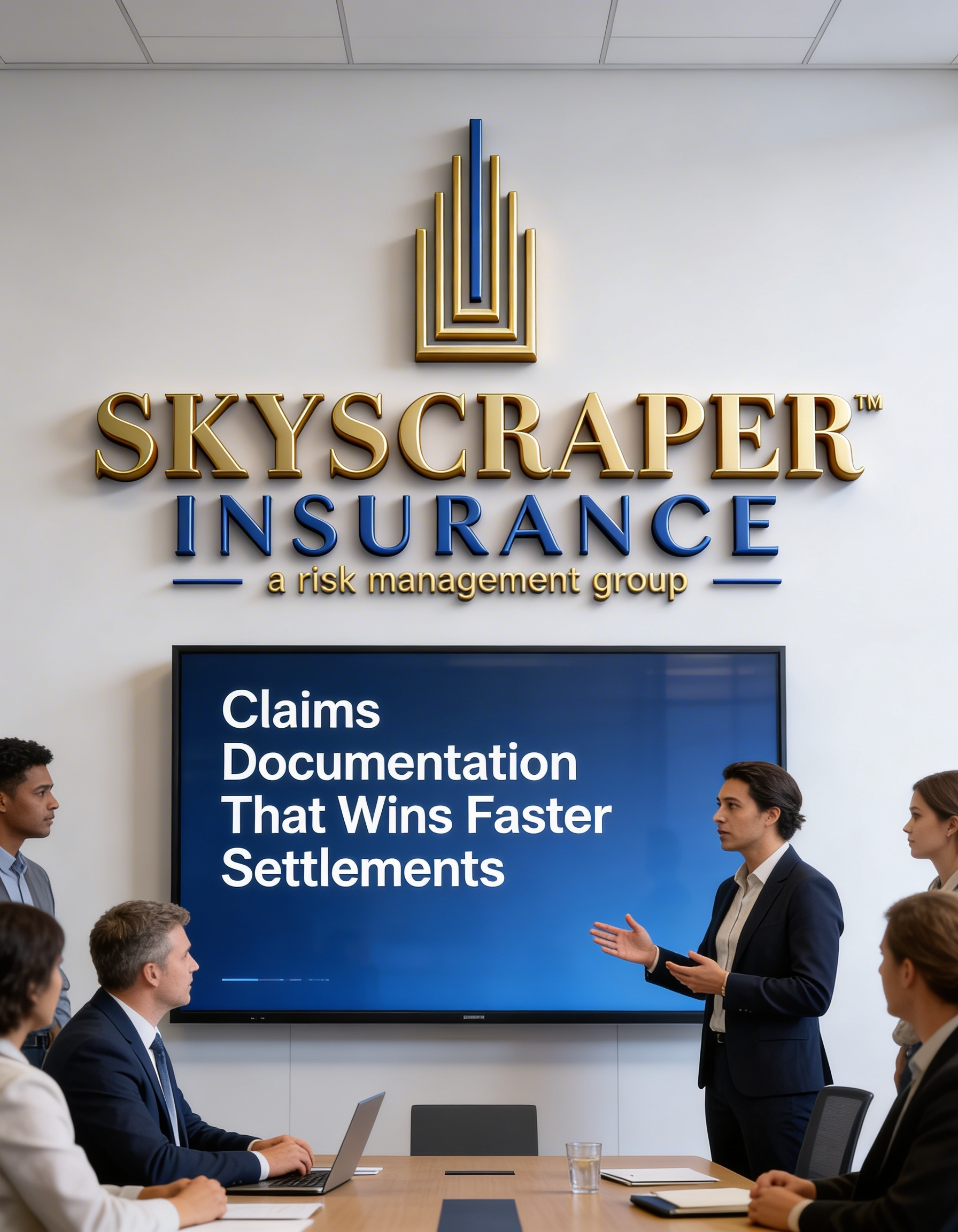
Claims Documentation: How to Win Faster Settlements
In the immediate aftermath of a loss. Whether it’s a fire at a construction site, a water leak in a professional office, or an inventory theft. The atmosphere is usually one of high stress and rapid reaction. At Skyscraper Insurance, we know that the true test of an insurance policy isn’t the premium you pay; it’s the speed and fairness of the settlement when you need it most.
However, there is a hidden factor that often dictates whether a claim is settled in weeks or dragged out for months: Documentation.
Insurance adjusters don’t work on “best guesses” they work on evidence. To reach a faster settlement and ensure your numbers hold up, you must provide a clear, undeniable paper trail. Here is exactly what adjusters need, why they need it, and how you can provide it to get a faster resolution.
1. The “Golden Hour” of Evidence
The first 60 minutes after a loss are the most critical for your claim. This is when evidence is “fresh” and least likely to be contested. Adjusters look for a chronological narrative that proves the cause and extent of the loss.
- Visual Proof: Before you start the cleanup, take high-resolution photos and videos. Don’t just photograph the damage; photograph the surrounding areas to provide context. For a Property & Construction claim, this might include showing weather conditions or site safety barriers.
- The Narrative: Write down a brief, factual summary of what happened. Avoid speculation. Simply state the “who, what, where, and when.” This prevents “story drift” later in the process.
2. The Adjuster’s Perspective: What They Really Need
An adjuster’s primary goal is to indemnify you, to put you back in the financial position you were in before the loss. They cannot do this without concrete data. At Skyscraper Insurance, we take an Analytical approach to claims, helping our clients gather the specific data points that adjusters prioritize:
- Proof of Value: Adjusters need to see what the items were worth before they were damaged. This includes purchase receipts, invoices, and depreciation schedules. For manufacturing equipment, this might include maintenance logs that prove the machinery was in good working order.
- Mitigation Records: You have a legal duty to mitigate your loss. If you had to board up a window or hire a restoration crew to pump out water, keep every single receipt. These are first-party expenses that are typically reimbursable, but only if documented immediately.
- Business Interruption Data: If your claim involves lost revenue, the adjuster will need at least two years of tax returns, profit and loss statements, and current contracts. They need to see a baseline of your success to calculate what you lost during the downtime.
3. “Rate Defense” Through Better Record-Keeping
It may seem strange to talk about Rate Defense during a claim, but the way you handle a claim today affects your premiums tomorrow. A claim that is well documented and professionally managed shows carriers that you are a Low Risk partner with strong internal controls.
When we present a claim to a carrier, our Independent Thinking allows us to advocate for you more effectively because the documentation is ironclad. We don’t just file the claim; we build a case for your settlement.
4. Avoiding the “Information Black Hole”
The #1 reason settlements are delayed is Missing Information Requests. Every time an adjuster has to email you to ask for a missing invoice, the clock resets.
To win a faster settlement, use a Centralized Claims Folder. Digital platforms are best for this. Store all communications, receipts, and photos all in one place, so that when the adjuster asks, “Do you have the 2025 audit for this equipment?” you can reply in minutes, not days.
Conclusion: Your Vision Deserves a Swift Recovery
At Skyscraper Insurance, we share your vision for a business that is resilient and unstoppable. A claim is a hurdle, but it shouldn’t be a brick wall. By mastering the art of claims documentation, you take control of your recovery.
Don’t wait for a crisis to realize your record keeping is insufficient. Start building the habits of documentation now, so that if the day comes, you have the proof you need to reach new heights again.
Is your team prepared to document a loss effectively? Contact our team at Skyscraper Insurance today for a no pressure review of your documentation protocols. Let’s make sure your documentation is as strong as your foundation!